Honestly, the whole industry’s been going crazy for pre-fabricated stuff lately. Everyone wants things faster, cheaper… you know the drill. It’s not always better, though. A lot of these designs look great on paper, super streamlined, but then you get on site and realize they haven’t thought about how a guy with gloves and a wrench is actually gonna deal with it.
I’ve seen it a million times. They’ll design something with a really tight access point, thinking, “Oh, it’ll save space!” But then you’re trying to get a socket wrench in there and you’re cursing under your breath for fifteen minutes. Have you noticed? The ones who actually spend time on the factory floor, watching things being built, those are the designers who get it right.
The Recent Trends in Oil Seal
Strangely enough, there’s been a real push for more sustainable oil seal materials. Everyone's talking about bio-based polymers and reducing the carbon footprint. It sounds good, right? But finding something that actually holds up under the pressure and heat…that's the tricky part. We’ve been testing a few new compounds, but they're usually more expensive. And, let's be honest, when budgets are tight, price usually wins.
The other thing I'm seeing is a bigger demand for oil seal designed for extreme environments – really high temperatures, corrosive chemicals, that sort of thing. Seems like everything is getting pushed to its limits these days.
Common Design Traps in Oil Seal
I encountered this at a pump factory last time. They designed a new oil seal with these fancy internal grooves to improve lubrication. Looked great in the CAD drawings. But those grooves? They filled up with grit and grime within a week. Total failure. It turns out, the grooves were too small to self-clean effectively. Simple, right?
Another thing is over-engineering. Some designers think more complexity equals more reliability. But honestly, the simpler the design, the fewer things that can go wrong. And remember, everything adds cost.
And don't even get me started on tolerances. If the shaft diameter isn’t exactly right, the oil seal is going to leak. It's a basic principle, but people still mess it up.
Materials Used in Oil Seal Construction
We use a lot of nitrile rubber, that’s the workhorse. Smells kinda…rubbery, if you know what I mean. It’s tough, holds up to oil well, and it’s relatively cheap. Then there’s Viton, which is a fluorocarbon rubber. That stuff is fantastic for high temperatures and harsh chemicals, but it's pricey and feels…slippery.
You also have PTFE (Teflon). That's the non-stick stuff. It’s great for low friction applications, but it’s soft, so you usually need to combine it with a stiffer backing material. It almost feels waxy to the touch. And then there’s polyurethane, which is good for abrasion resistance. You can tell its a good grade if it feels sort of…dense, not flimsy.
We also experiment with some newer materials – silicone, ethylene propylene diene monomer (EPDM) rubber… the list goes on. Each one has its pros and cons, depending on the application.
Testing Methods for Oil Seal Reliability
Lab tests are okay, I guess. Pressure testing, temperature cycling, chemical resistance… they give you a baseline. But they don’t tell the whole story. You need to see how these things perform in the real world.
We do a lot of field testing. We'll put an oil seal on a piece of equipment and just let it run, and run, and run. We monitor for leaks, wear, and any other signs of failure. It's slow, but it's the most reliable way to assess performance.
Oil Seal Performance Metrics
Real-World Application of Oil Seal
You find oil seal everywhere – in engines, pumps, hydraulic cylinders, gearboxes…basically anything that needs to keep fluids contained. In the automotive industry, they're critical for preventing oil leaks and ensuring engine performance. In aerospace, they have to withstand extreme temperatures and pressures.
They’re also essential in industrial machinery, like compressors and pumps. And oddly enough, they're used in a lot of food processing equipment too, where hygiene is paramount.
Advantages and Disadvantages of Oil Seal
The biggest advantage of a good oil seal is, well, preventing leaks! That saves money on fluids, reduces downtime, and protects the environment. They’re relatively simple and inexpensive to install, too. But…they do wear out over time. They can be damaged by abrasive particles, extreme temperatures, or incompatible fluids.
And sometimes, the seal itself can cause problems. If it's too tight, it can create excessive friction and wear on the shaft. Too loose, and you've got a leak. It's a balancing act.
Customization Options for Oil Seal
We do a lot of customization. Sometimes a customer needs a specific size or material to fit a unique application. Last month, that small boss in Shenzhen who makes smart home devices insisted on changing the interface to , and the result was a nightmare trying to find an oil seal small enough to fit the housing, and tough enough to handle the constant plugging and unplugging. He learned a lesson that day.
We can also modify the lip design to improve sealing performance or reduce friction. We can add coatings to enhance chemical resistance or abrasion resistance. Really, if you can think it, we can probably build it.
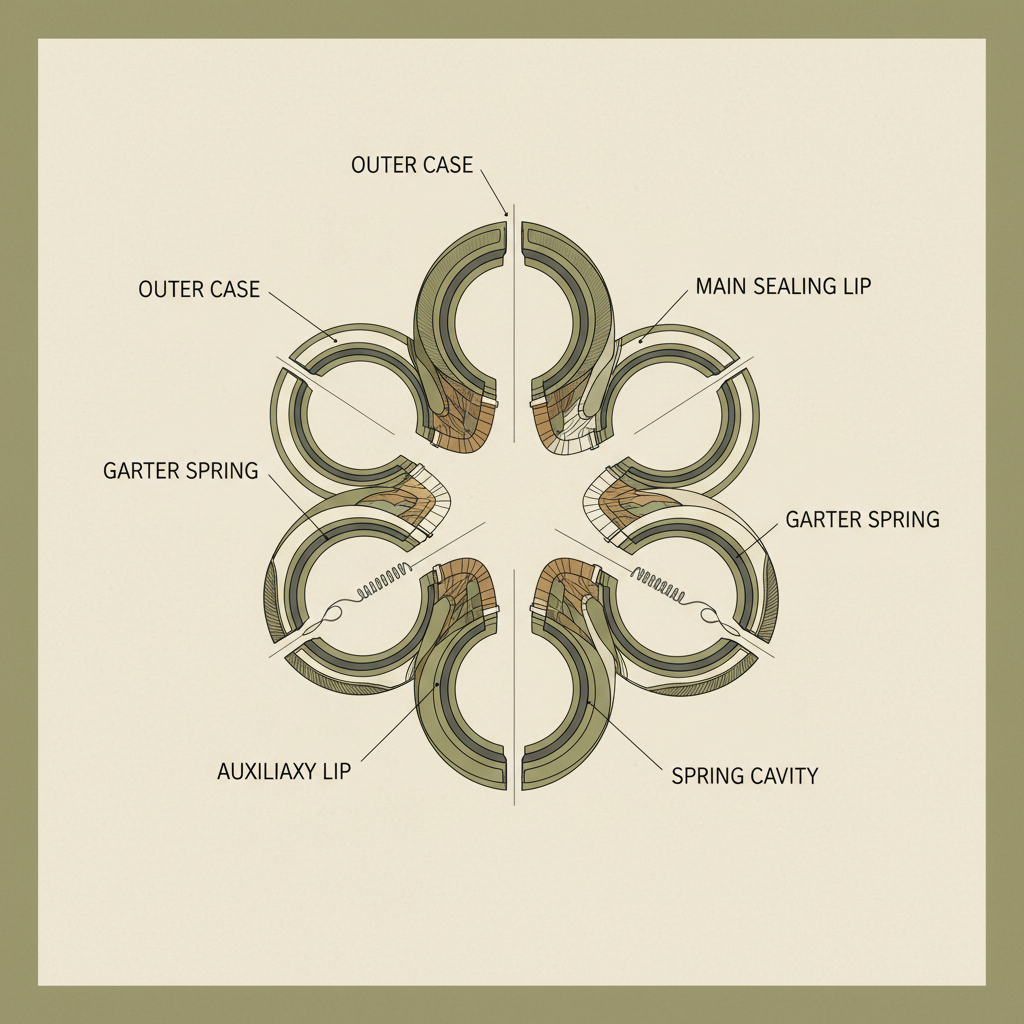
We also offer different spring configurations to suit various applications. Some applications require a heavy-duty spring to maintain a tight seal, while others need a lighter spring to reduce friction.
Summary of Oil Seal Customization Parameters
| Customization Parameter |
Typical Range/Options |
Impact on Performance |
Cost Implications |
| Material Composition |
Nitrile, Viton, Silicone, PTFE, EPDM |
Temperature Resistance, Chemical Compatibility, Abrasion Resistance |
Low to High (Viton & PTFE most expensive) |
| Lip Profile |
Single, Double, Multi-Lip |
Sealing Efficiency, Friction, Wear |
Low to Medium |
| Spring Type |
Light, Medium, Heavy |
Sealing Force, Axial Load, Friction |
Low to Medium |
| Size & Dimensions |
Custom Diameters, Widths, Thicknesses |
Fit & Compatibility, Sealing Performance |
Medium to High (dependent on complexity) |
| Surface Coating |
Chrome, Nickel, Plasma Coating |
Corrosion Resistance, Wear Resistance, Friction |
Medium to High |
| Housing Integration |
Snap-In, O-Ring, Interference Fit |
Installation Ease, Seal Integrity, Vibration Resistance |
Low to Medium |
FAQS
That’s a big one. Usually it’s down to contamination – dirt, grit, or abrasive particles getting past the seal. But it can also be caused by excessive heat, chemical attack, or just plain old wear and tear. Improper installation is a big culprit too. If it’s not seated correctly, it’s going to leak.
It depends on what fluids you’re dealing with, the temperature range, and the pressure. Nitrile is a good all-around choice for oil, but if you're using something corrosive, you’ll need Viton or PTFE. High temperatures? Viton again. It’s a bit of a puzzle, but knowing your application is key.
Slowly, carefully, and with the right tools! Use a seal installer designed for the job. Don't use a hammer, for goodness sake. Lubricate the seal with a compatible fluid before installation to help it slide in smoothly. And make sure the shaft surface is clean and smooth.
That’s a loaded question! It really varies. A well-maintained seal in a clean environment can last for years. But in a harsh environment, it might only last a few months. It all depends on the application and the operating conditions.
Generally, no. Once an oil seal has been compressed and installed, it’s lost its springiness. Trying to reuse it is asking for trouble. They're relatively cheap, so just replace it. It’s not worth the risk of a leak.
Obvious signs include leaks, of course. But also look for signs of wear, like cracking or hardening of the rubber. If you notice a drop in performance or increased fluid consumption, it could be a sign of a failing seal.
Conclusion
So, yeah, oil seal. Seem simple, right? But there’s a lot more to it than meets the eye. Choosing the right material, designing it correctly, installing it properly... it all matters. And ultimately, it's the little things that keep the whole machine running.
Anyway, I think it all comes down to this: whether this thing works or not, the worker will know the moment he tightens the screw. He’ll feel it. And if he doesn't, well, we go back to the drawing board.