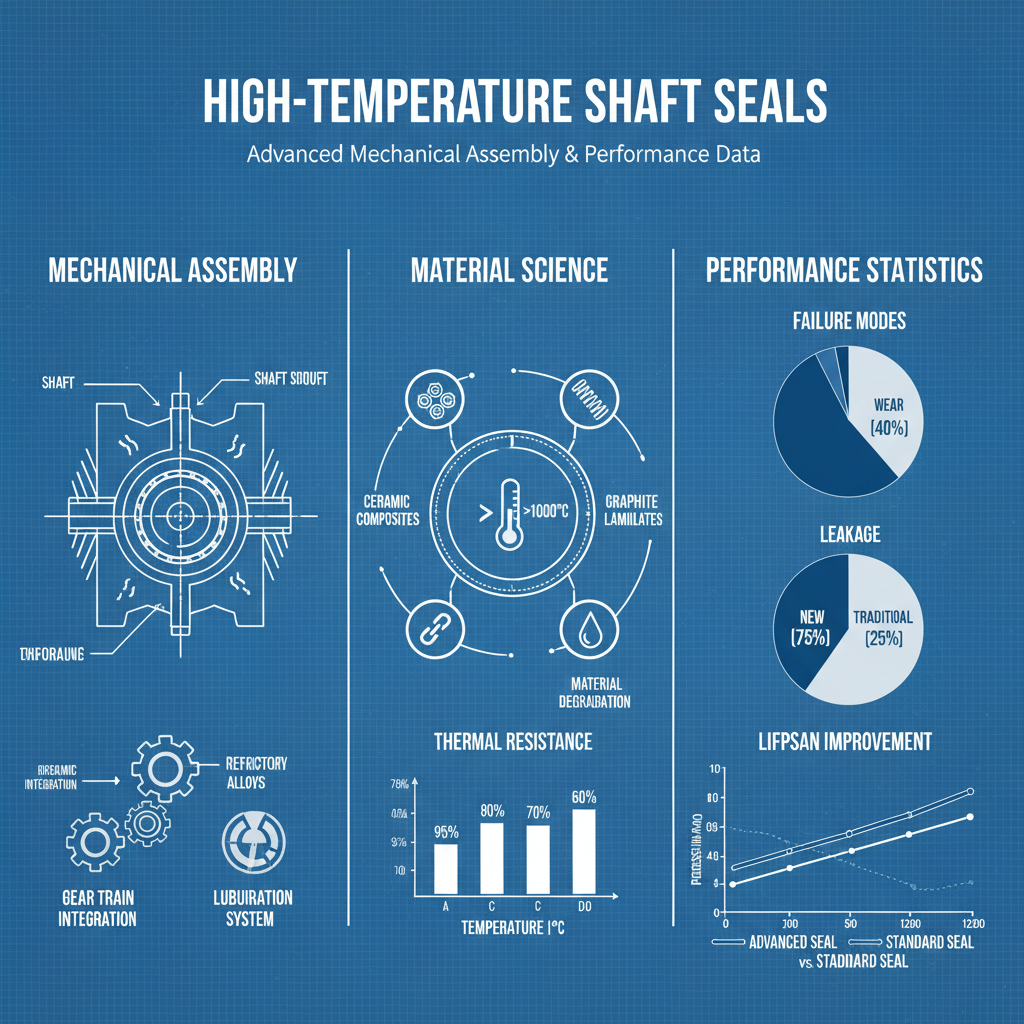
High temperature shaft seals are critical components in a vast array of industrial applications, playing a vital role in maintaining the efficiency and reliability of rotating equipment. These seals are specifically engineered to withstand extreme temperatures, often exceeding the capabilities of standard sealing materials. Understanding their design, materials, and applications is crucial for engineers, technicians, and procurement professionals across diverse sectors.
The global demand for high temperature shaft seals is driven by the increasing sophistication of industrial processes and the push for improved energy efficiency. Industries like aerospace, oil and gas, power generation, and automotive are heavily reliant on these seals to prevent leakage and maintain optimal performance under harsh conditions. The market is experiencing consistent growth, fueled by technological advancements and a need for longer-lasting, more robust sealing solutions.
Ultimately, effective high temperature shaft seals contribute significantly to reducing downtime, minimizing environmental impact, and ensuring the safe and reliable operation of critical machinery. Investing in high-quality seals and proper maintenance protocols offers substantial long-term benefits for businesses and industries worldwide.
The Importance of High Temperature Shaft Seals
The significance of high temperature shaft seals extends far beyond simply preventing leakage. In critical applications, seal failure can lead to catastrophic consequences, including equipment damage, process interruptions, and safety hazards. Choosing the right seal for a specific operating environment is therefore paramount.
These seals are essential for ensuring the efficient operation of rotating equipment across numerous industries. Their ability to maintain a tight seal at elevated temperatures minimizes energy loss, reduces emissions, and contributes to overall sustainability. The selection process requires careful consideration of factors such as temperature range, pressure, fluid compatibility, and rotational speed.
Defining High Temperature Shaft Seals
High temperature shaft seals are mechanical devices designed to prevent the leakage of fluids (liquids or gases) between a rotating shaft and a stationary housing, while simultaneously operating effectively in environments characterized by high temperatures. Unlike standard shaft seals, these specialized components utilize materials and designs capable of withstanding thermal expansion, material degradation, and changes in lubrication properties at elevated temperatures.
The need for such seals arises from the demands of modern industry, where processes often involve extremely hot fluids or gases. Applications like steam turbines, high-speed pumps, and geothermal energy systems necessitate seals that can maintain their integrity and performance under these conditions. The ability to consistently deliver reliable sealing is crucial for these applications.
Their connection to humanitarian needs is less direct but still present. Reliable power generation and efficient industrial processes, facilitated by dependable high temperature shaft seals, contribute to economic stability and improved living standards globally. They support essential infrastructure and provide the foundation for numerous societal benefits.
Core Components and Material Science
The effectiveness of high temperature shaft seals hinges on a careful selection of materials and precise engineering of their core components. Common materials include specialized elastomers like Viton (FKM), FFKM, and silicone, as well as advanced polymers like PTFE (Teflon) and PEEK. These materials exhibit exceptional resistance to heat, chemicals, and abrasion.
Key components typically include the sealing lip, which provides the primary sealing surface; the spring, which maintains lip contact; and the housing, which provides structural support. The design of these components – lip geometry, spring tension, and housing dimensions – is critical to achieving optimal performance and longevity. Materials are chosen considering the specific operating environment and fluid compatibility.
Material science plays a crucial role in the development of advanced high temperature shaft seals. Ongoing research focuses on creating new materials with even greater thermal stability, chemical resistance, and wear properties. Nanomaterials and composite structures are being explored to further enhance seal performance and extend their service life.
Key Performance Indicators of High Temperature Shaft Seals
Assessing the performance of high temperature shaft seals requires a focus on several key indicators. Thermal stability, the ability to maintain sealing integrity at elevated temperatures, is paramount. Chemical resistance, ensuring compatibility with the operating fluid, is also critical.
Wear resistance, reflecting the seal’s ability to withstand abrasion and friction, directly impacts its lifespan. Furthermore, the seal's performance is heavily influenced by its compression set – its ability to retain its shape and sealing force over time. These factors combine to determine overall reliability.
High Temperature Shaft Seal Performance Comparison
Global Applications of High Temperature Shaft Seals
High temperature shaft seals are deployed in a remarkably diverse range of applications worldwide. The power generation sector, encompassing both traditional fossil fuel plants and renewable energy facilities like geothermal power plants, relies heavily on these seals for turbine and pump applications.
The oil and gas industry utilizes them extensively in downhole tools, compressors, and pumps operating in harsh environments. Aerospace applications, demanding extreme reliability and performance, incorporate these seals in jet engines and auxiliary power units. Even the automotive industry utilizes high temperature seals within engine and transmission systems.
Advantages and Long-Term Value Proposition
Investing in high-quality high temperature shaft seals offers a multitude of advantages. Reduced downtime is a significant benefit, as these seals minimize the risk of leaks and failures that can disrupt operations. Lower maintenance costs result from the extended lifespan and robust performance of premium seals.
Furthermore, these seals contribute to improved energy efficiency by preventing fluid loss and optimizing equipment performance. They enhance safety by minimizing the risk of hazardous leaks and ensuring the reliable operation of critical machinery. Ultimately, a strong long-term value proposition is built on reliability, cost savings, and enhanced operational safety.
Future Trends and Innovations in Sealing Technology
The field of high temperature shaft seals is undergoing continuous innovation. Research and development efforts are focused on exploring new materials with superior thermal and chemical resistance, such as advanced ceramics and nanocomposites. Digitalization is also playing a role, with smart seals incorporating sensors to monitor performance and predict potential failures.
The drive towards sustainability is fueling the development of eco-friendly sealing materials and designs. Automation and advanced manufacturing techniques are enabling the production of seals with tighter tolerances and improved performance characteristics. The integration of artificial intelligence and machine learning promises to further optimize seal design and maintenance strategies.
These advancements are critical for meeting the evolving demands of industries operating in increasingly challenging environments and striving for greater efficiency and sustainability.
FAQS
The lifespan of a high temperature shaft seal varies significantly depending on the application, operating conditions, and seal material. However, with proper installation and maintenance, a well-chosen seal can typically last between 2 to 5 years, and in some cases, even longer. Factors like temperature extremes, fluid compatibility, and shaft speed all impact longevity.
Viton (FKM), FFKM, and silicone elastomers are commonly used for high-temperature applications due to their excellent thermal stability and chemical resistance. PTFE (Teflon) and PEEK are also popular choices, especially in demanding environments. The specific material selection depends on the fluid being sealed and the maximum operating temperature.
Preventative measures include proper lubrication, ensuring correct shaft alignment, and protecting the seal from contamination. Regular inspections can identify potential problems early on. Avoid exceeding the seal’s temperature and pressure limits. Implementing a proactive maintenance schedule is crucial for maximizing seal lifespan.
Spring tension is critical for maintaining consistent contact between the sealing lip and the shaft. Proper tension ensures an effective seal, preventing leakage. However, excessive tension can lead to premature wear, while insufficient tension may compromise sealing performance. Optimizing spring tension is key to long-term reliability.
Yes, advancements in material science, such as nanocomposites and ceramic seals, are enhancing performance. Smart seals with embedded sensors are also emerging, providing real-time monitoring of seal health. Digitalization and AI-driven predictive maintenance are revolutionizing seal management.
Selecting the appropriate seal requires careful consideration of operating conditions, including temperature, pressure, fluid type, shaft speed, and environmental factors. Consult with a sealing specialist to determine the optimal material, design, and size for your specific application. Proper analysis is crucial for preventing premature failures.
Conclusion
High temperature shaft seals are indispensable components in a wide range of industries, providing critical sealing solutions in challenging environments. Understanding their design, materials, and application is essential for ensuring equipment reliability, maximizing efficiency, and minimizing downtime. Investing in high-quality seals and implementing proactive maintenance practices yields significant long-term benefits.
As technology continues to advance, the field of high temperature shaft seals will undoubtedly witness further innovation. Exploring new materials, embracing digitalization, and prioritizing sustainability will pave the way for even more robust, efficient, and environmentally friendly sealing solutions. For expert guidance and a comprehensive selection of high-performance seals, visit our website: www.hkaiseal.com