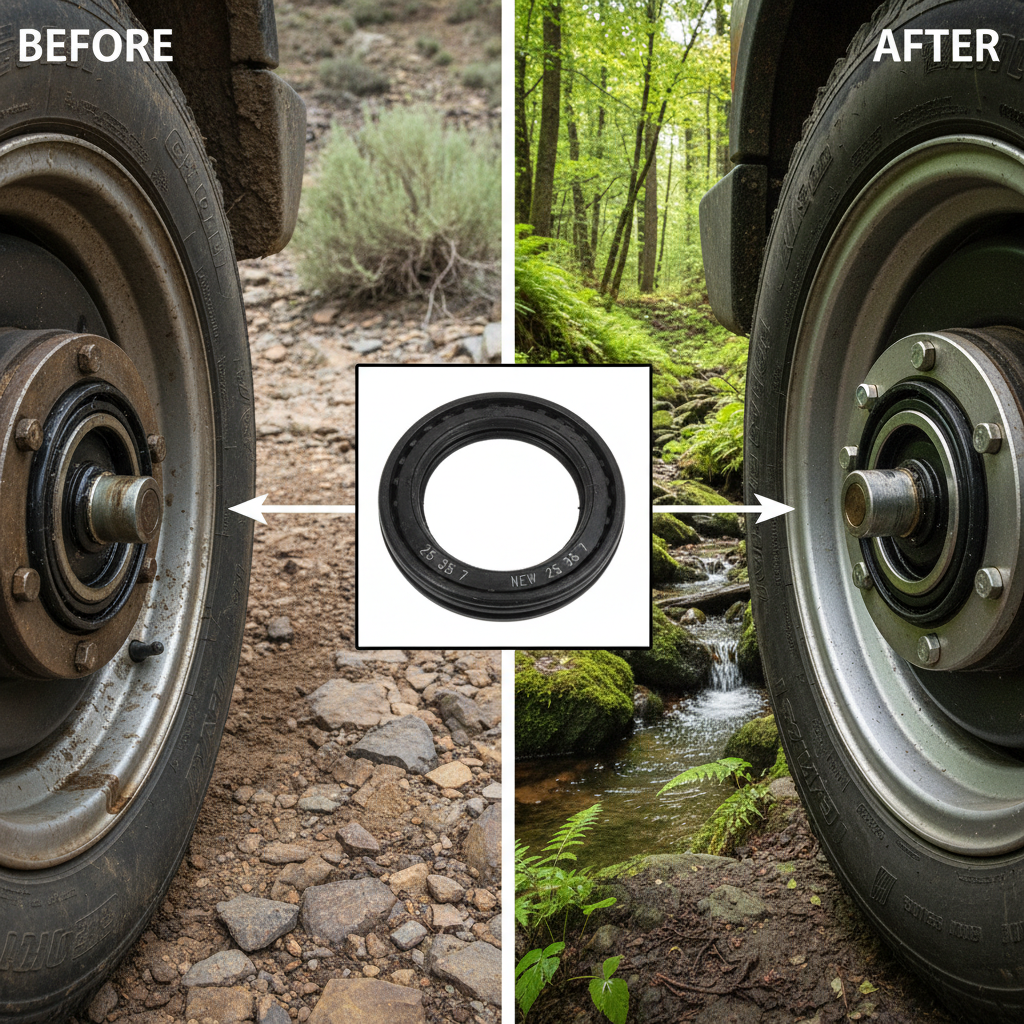
In the high-stakes world of industrial machinery, the integrity of a system often depends on the smallest components. Among these, custom oil seals serve as the critical first line of defense, preventing lubricant leakage and blocking external contaminants from compromising internal mechanical precision. Whether in heavy-duty construction equipment or high-pressure hydraulic systems, the right seal ensures operational continuity and reduces costly downtime.
Globally, the demand for precision-engineered sealing solutions has surged as industries push the limits of pressure and temperature. Standard off-the-shelf parts often fail to meet the rigorous demands of specialized environments, leading to premature wear and catastrophic system failure. This is where the strategic implementation of custom oil seals becomes essential, allowing engineers to tailor material composition and geometry to specific operational stresses.
Understanding the nuances of high-pressure sealing—such as the use of NBR and FKM materials and the integration of metal rings—is not just a technical requirement but a financial imperative. By optimizing the interface between moving parts and stationary housings, companies can significantly extend the lifespan of their assets. This guide explores the critical role of these specialized components in maintaining industrial efficiency and safety.
Global Industry Context of Custom Oil Seals
On a global scale, the industrial sector relies heavily on ISO-standardized components to ensure interchangeability and safety. However, as machinery becomes more specialized, the "one size fits all" approach has proven insufficient. The rise of custom oil seals reflects a broader industrial shift toward precision engineering, where seals are designed to handle specific pressures—such as the 0.98MPa threshold seen in TCN high-pressure series—to prevent environmental contamination.
In regions with extreme climatic conditions or heavy industrialization, the failure of a single seal can lead to massive productivity losses. The challenge lies in balancing material elasticity with structural rigidity. By integrating metal rings into the rubber matrix, manufacturers can produce seals that resist deformation under extreme loads, ensuring that critical infrastructure remains operational in the most demanding environments.
Defining High-Pressure Custom Oil Seals
At its core, custom oil seals are precision-engineered barriers designed to retain lubricants and exclude debris. Unlike standard seals, these components are often customized in terms of material (such as NBR for general oil resistance or FKM/FPM for high-temperature applications) and dimensions to fit unique OEM specifications. The addition of a metal reinforcement ring allows these seals to maintain their shape even when subjected to significant internal pressure.
In the context of modern manufacturing, these seals are more than just rubber rings; they are critical components of a machine's health management system. By utilizing specific materials like Fluorocarbon (FKM), custom seals can operate in chemically aggressive environments where standard Nitrile (NBR) would degrade. This customization is vital for humanitarian and infrastructure projects, such as water treatment plants or remote power generators, where replacement parts are difficult to source.
The technical definition of a "high-pressure" seal typically refers to its ability to withstand pressures exceeding standard atmospheric limits without leaking. For instance, the TCN series is specifically designed for high-pressure resistance (up to 0.98MPa), making it an ideal choice for hydraulic systems and heavy-duty gearboxes where maintaining a vacuum or a pressurized lubricant film is essential for component longevity.
Core Components of Sealing Performance
The effectiveness of custom oil seals is primarily determined by the synergy between the elastomer and the reinforcing elements. NBR (Nitrile Butadiene Rubber) provides excellent oil resistance and is the industry standard for most general-purpose applications, ensuring that the seal remains flexible and tight against the shaft.
For extreme environments, FKM/FPM (Fluorocarbon) is utilized due to its superior thermal stability and chemical resistance. When these materials are combined with a high-strength metal ring, the resulting seal can withstand the 0.98MPa pressure resistance required for high-load hydraulic kits and concrete mixer seals, preventing the rubber from "extruding" into the gap between the shaft and housing.
Beyond materials, the geometry of the seal—including the lip design and the surface finish—plays a pivotal role. Customization allows for the adjustment of the sealing lip to better suit the specific rotational speed of the shaft, reducing friction and heat build-up, which in turn extends the operational life of the custom oil seals.
Critical Factors in Seal Selection
Selecting the right custom oil seals requires a deep analysis of the operating environment. Factors such as the type of lubricant, the maximum operating temperature, and the peak system pressure must be aligned with the material properties. For example, a seal intended for a high-pressure hydraulic kit must prioritize pressure resistance over simple dust exclusion.
Furthermore, the mechanical tolerances of the housing and shaft are critical. A seal that is too tight will cause excessive friction and heat, while one that is too loose will leak. Customization allows for "Nonstandard" sizing, ensuring a perfect fit that optimizes the seal's contact pressure, thereby maximizing the efficiency of the system.
Performance Comparison of Custom Oil Seals Materials
Global Applications and Use Cases
The application of custom oil seals spans across diverse industrial landscapes. In the construction sector, concrete mixer seals must withstand abrasive cement dust and high rotational forces. Here, a custom-designed dust oil seal prevents particles from entering the bearing housing, which would otherwise cause rapid abrasive wear and system failure.
In the automotive and transport industries, wheel hub oil seals are essential for maintaining lubrication in axle assemblies. In remote industrial zones, such as mining operations in the Andes or oil rigs in the North Sea, the use of high-pressure oil seals ensures that machinery can operate for thousands of hours without requiring a technician's intervention, thereby reducing the logistical burden of maintenance in isolated areas.
Long-Term Value and Reliability
Investing in custom oil seals offers significant long-term economic advantages. While the initial cost of a customized FKM seal with a metal ring may be higher than a standard NBR seal, the reduction in leak-related downtime and the extension of the machinery's overall lifespan create a much lower Total Cost of Ownership (TCO).
Beyond the financial metrics, there is a critical safety dimension. In high-pressure hydraulic systems, a seal failure can lead to high-velocity fluid injection injuries or environmental spills. The reliability provided by a seal rated for 0.98MPa ensures that operators can work with confidence, knowing that the system is contained and stable under peak loads.
Furthermore, the ability to order specific OEM numbers (such as the AP or UP series) ensures that maintenance teams can perform precise replacements without needing to modify existing hardware. This consistency in sizing and material performance builds trust between the component manufacturer and the end-user, fostering a culture of reliability and innovation.
Future Trends in Sealing Technology
The future of custom oil seals is being shaped by the drive toward sustainability and "Green Industry." New elastomer blends are being developed to be more biodegradable without sacrificing the critical 0.98MPa pressure resistance. Additionally, there is a growing trend toward integrating sensors into the seal housing to enable "predictive maintenance," where a seal can signal its own wear before a leak occurs.
Digital transformation is also impacting the customization process. With the advent of 3D modeling and precision CNC machining, the turnaround time for "Nonstandard" customized seals has plummeted. Engineers can now simulate the thermal and pressure stresses on a seal design in a virtual environment before a single piece of rubber is molded, ensuring a near-perfect first-time fit.
As automation increases in the rubber and plastics industry, the precision of metal ring integration will improve, allowing for even thinner yet stronger seals. This will lead to more compact machinery designs, reducing the overall weight of industrial equipment while maintaining the rigorous sealing standards required for high-pressure hydraulic kits.
Material and Performance Analysis for High-Pressure Seals
| Material Type |
Max Pressure (MPa) |
Temp Range (°C) |
Primary Application |
| NBR (Standard) |
0.3 - 0.5 |
-40 to 120 |
General Dust Oil Seals |
| NBR + Metal Ring |
0.98 |
-30 to 110 |
Concrete Mixer Seals |
| FKM/FPM |
0.6 - 0.8 |
-20 to 200 |
High-Temp Hydraulic Kits |
| FKM + Metal Ring |
0.98 |
-20 to 200 |
Extreme High-Pressure Seal |
| Custom Rubber |
Variable |
Custom |
Specialized OEM Parts |
| Hybrid Polymer |
1.0+ |
-50 to 150 |
Aerospace/Deep-Sea Oil Seals |
FAQS
NBR (Nitrile) is excellent for general oil resistance and is more cost-effective, making it ideal for standard industrial use. FKM (Fluorocarbon) offers significantly higher temperature resistance and chemical stability, making it necessary for high-heat environments or exposure to aggressive synthetic lubricants where NBR would fail.
Yes, specifically the high-pressure TCN series. This is achieved by integrating a high-strength metal ring into the rubber structure, which prevents the sealing lip from collapsing or extruding under high pressure, ensuring a tight seal even at 0.98MPa.
If your machine operates within standard temperature ranges and follows common OEM dimensions, a standard seal suffices. However, if you face frequent leakages, operate in extreme heat/cold, or have non-standard shaft dimensions, custom oil seals are required to ensure longevity.
Depending on the complexity and material, the Minimum Order Quantity (MOQ) is typically around 20 pieces. This allows for the setup of specialized molds and quality control testing to ensure every seal meets the pressure resistance specifications.
For pressures reaching 0.98MPa, metal rings are almost always necessary. They provide the structural skeleton that supports the elastomer, preventing the seal from distorting under the force of the pressurized fluid, which is critical for maintaining a leak-proof interface.
You should provide the internal diameter, external diameter, thickness, desired material (NBR/FKM), and the maximum operating pressure. If you have an OEM part number (e.g., from the AP or UP catalogs), providing that will ensure the most accurate match.
Conclusion
The role of custom oil seals extends far beyond simple leakage prevention; they are the unsung heroes of industrial reliability. By carefully selecting materials like NBR and FKM and utilizing high-pressure designs capable of withstanding 0.98MPa, industries can drastically reduce maintenance costs and enhance equipment safety. From the rugged environment of a concrete mixer to the precision of a hydraulic kit, the ability to customize these components ensures that machinery performs optimally regardless of the external stressors.
As we move toward an era of smarter, more sustainable manufacturing, the importance of precision sealing will only grow. Investing in high-quality, customized sealing solutions today is a strategic move toward operational excellence and environmental responsibility. We encourage engineers and procurement specialists to audit their current sealing points and consider the advantages of tailored solutions to future-proof their operations. Visit our website for more information: www.hkaiseal.com