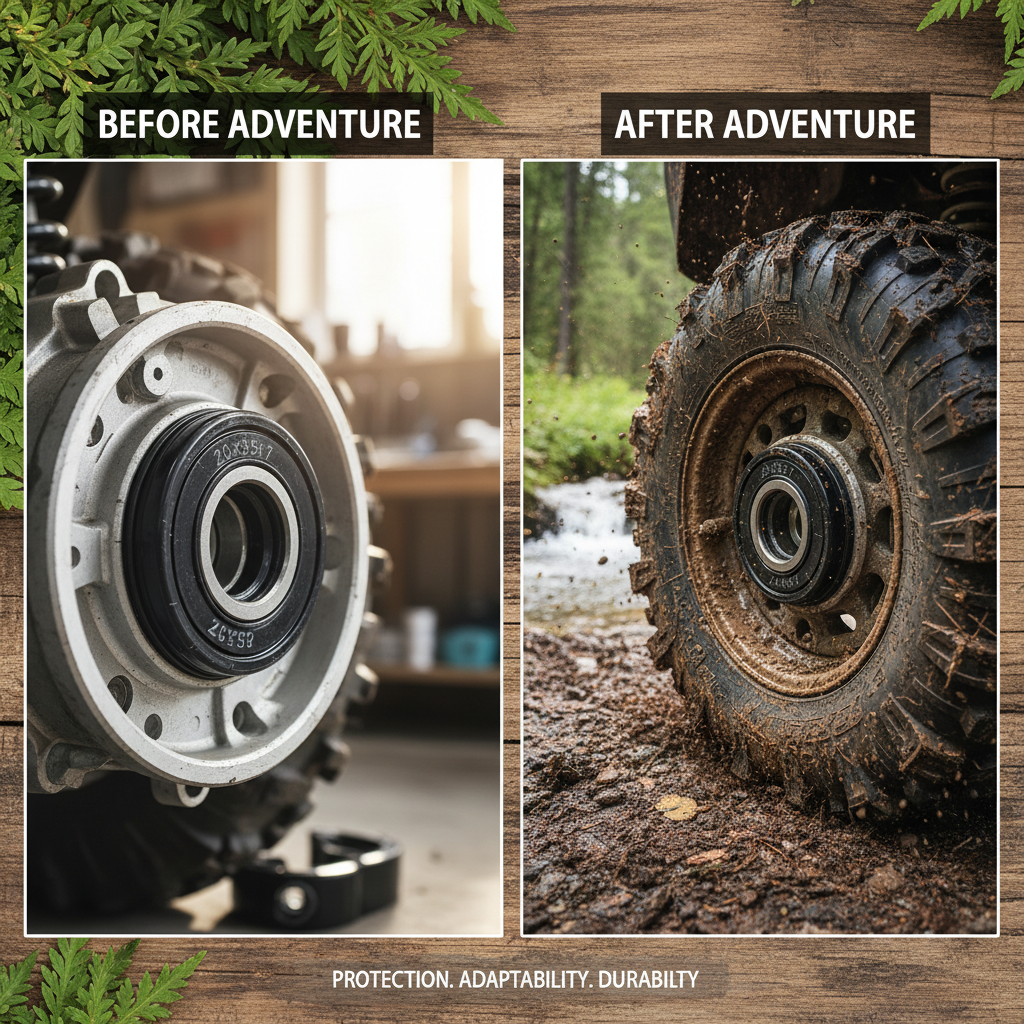
In the demanding landscape of industrial machinery, the integrity of a system often depends on the smallest components. Among these, custom made oil seals play a pivotal role in preventing lubricant leakage and protecting critical internal components from environmental contaminants. By providing a precision-engineered barrier, these seals ensure that high-pressure systems maintain their operational efficiency without costly downtime.
The shift toward specialized machinery has increased the demand for sealing solutions that go beyond standard dimensions. Whether it is for a concrete mixer or a high-pressure hydraulic system, the ability to procure custom made oil seals allows engineers to optimize equipment performance, extending the lifespan of bearings and shafts while reducing the frequency of maintenance intervals.
Understanding the nuances of material selection—such as NBR and FKM—and the physics of pressure resistance is essential for any procurement manager or technical engineer. This comprehensive guide explores the critical role of custom made oil seals, focusing on the High Pressure TCV series and how tailored specifications solve the most complex industrial sealing challenges.
Global Importance of Custom Made Oil Seals
On a global scale, the manufacturing sector relies heavily on the precision of sealing technology to maintain ISO standards of quality and safety. As industries push for higher operational pressures—often exceeding 0.98MPa—the limitations of "off-the-shelf" parts become apparent. This is where custom made oil seals become indispensable, providing a bespoke fit that eliminates the risks of premature wear and catastrophic fluid loss.
The economic impact of seal failure in heavy industries, such as construction and hydraulic machinery, can be staggering. By integrating custom made oil seals, companies can reduce unplanned downtime by up to 30%, ensuring that equipment operating in harsh environments—from the humid coastlines of Southeast Asia to the frigid industrial zones of Northern Europe—continues to perform with maximum reliability.
Defining the Technical Scope of Custom Sealing
At its core, custom made oil seals are precision-engineered components designed to enclose a lubricant within a housing while simultaneously excluding dust, moisture, and other external contaminants. Unlike standard seals, custom versions are tailored to specific shaft diameters, housing bores, and axial widths, ensuring a perfect interference fit that is critical for maintaining pressure.
The technical scope extends beyond simple dimensions to include the chemistry of the materials used. For instance, the choice between Nitrile Butadiene Rubber (NBR) for general oil resistance and Fluorocarbon (FKM/FPM) for high-temperature or chemically aggressive environments determines the seal's longevity. When these materials are combined with a reinforced metal ring, the result is a high-pressure TCV seal capable of withstanding intense mechanical stress.
In the context of modern industry, "custom" means the ability to align the seal's physical properties with the specific application's pressure requirements. With the High Pressure TCV oil seal offering resistance up to 0.98MPa, these components bridge the gap between standard dust seals and specialized high-pressure hydraulic kits, providing a versatile solution for a wide array of industrial machinery.
Core Components of High Pressure TCV Seals
The effectiveness of custom made oil seals depends on the synergy between the elastomer and the structural reinforcement. In the High Pressure TCV series, the integration of a metal ring provides the necessary radial stability, preventing the seal from extruding into the gap between the shaft and the housing under high pressure.
Material selection is the second pillar of these custom made oil seals. NBR offers excellent abrasion resistance and is ideal for standard petroleum-based lubricants, while FKM/FPM provides superior thermal stability, making it the preferred choice for high-heat applications where standard rubber would degrade or harden.
Finally, the dimensional precision of the TCV seal is what defines its "custom" nature. With a vast size catalog ranging from small 13x26x7mm units to massive 185x205x10/8.5mm seals, these components are engineered to meet the exact tolerances of the machinery, ensuring that the sealing lip maintains constant, optimal contact with the rotating shaft.
Performance Metrics in Industrial Applications
Evaluating the performance of custom made oil seals requires a look at several key metrics: pressure resistance, wear rate, and thermal endurance. The TCV High Pressure Oil Seal is specifically rated for 0.98MPa, a benchmark that allows it to be used in heavy-duty hydraulic and mechanical systems where standard seals would fail.
By comparing different material compositions, engineers can determine the most cost-effective and durable solution for their specific environment. For example, while NBR is highly efficient for medium temperatures, FKM is essential for extreme heat, creating a clear trade-off between initial cost and operational lifespan.
Comparison of Material Performance for Custom Made Oil Seals
Global Use Cases for Tailored Oil Seals
In the construction sector, custom made oil seals are critical for Concrete Mixer Seals. Because these machines operate in highly abrasive environments where cement dust can easily penetrate standard seals, the High Pressure TCV design—with its reinforced metal ring and NBR/FKM options—provides a robust barrier that prevents slurry from entering the gearboxes.
Beyond construction, these seals are widely utilized in hydraulic seal kits for industrial presses and heavy lifting equipment in mining zones. In remote industrial regions, where a single leak can lead to days of downtime due to the lack of local replacement parts, the reliability of a custom-engineered seal ensures that machinery continues to operate at peak capacity under extreme pressure.
Long-Term Value and Reliability Benefits
The long-term value of investing in custom made oil seals is measured not just in the prevention of leaks, but in the total cost of ownership (TCO). A seal that is perfectly matched to the shaft's surface finish and the fluid's chemical composition will last significantly longer than a generic alternative, reducing the labor costs associated with frequent replacements.
From a safety perspective, high-pressure seals are non-negotiable. A failure in a high-pressure oil seal can lead to sudden loss of hydraulic control, potentially causing equipment failure or workplace accidents. By utilizing the 0.98MPa rated TCV seals, operators gain peace of mind, knowing their systems are secured by components engineered specifically for high-stress loads.
Furthermore, the sustainability aspect cannot be overlooked. Reducing oil leakage through the use of high-precision custom made oil seals minimizes environmental contamination and lowers the consumption of lubricants, aligning industrial operations with modern green energy and environmental protection goals.
Future Trends in Custom Seal Engineering
The future of custom made oil seals is moving toward "smart materials" and advanced polymers that can adapt to temperature fluctuations in real-time. As automation and digital transformation sweep through the manufacturing sector, we are seeing a shift toward seals that can withstand higher rotational speeds and more aggressive synthetic lubricants without losing their elasticity.
Additive manufacturing, or 3D printing of elastomers, is also beginning to influence how custom seals are prototyped. This allows for the creation of complex geometries that were previously impossible to mold, potentially leading to seals with integrated lubrication channels or variable hardness across the seal profile to optimize both friction and sealing force.
As industries transition toward carbon neutrality, the development of biodegradable yet high-performance elastomers will be a primary focus. These next-generation custom made oil seals will maintain the high-pressure resistance of the TCV series while significantly reducing the ecological footprint of the rubber manufacturing process.
Technical Analysis of Custom Made Oil Seal Specifications
|
Material Type
|
Pressure Rating
|
Primary Application
|
Durability Score (1-10)
|
| NBR (Nitrile) |
Up to 0.98MPa |
General Industrial/Oil |
7 |
| FKM (Viton) |
Up to 0.98MPa |
High Temp/Chemical |
9 |
| Rubber + Metal Ring |
High Pressure (TCV) |
Concrete Mixers/Hydraulics |
10 |
| Standard Rubber |
Low Pressure |
Dust Exclusion |
6 |
| Custom Polyurethane |
Medium-High |
Heavy Duty Bearings |
8 |
| Specialty Hybrid |
Customized |
Aerospace/Specialty |
9 |
FAQS
Custom made oil seals are engineered to exact dimensional tolerances and specific environmental requirements. While standard seals may fit generally, custom seals provide an optimized interference fit and use materials (like FKM for heat or reinforced metal rings for pressure) specifically chosen for the application. This reduces leakage, eliminates premature wear caused by poor fitting, and allows the system to operate at higher pressures, such as the 0.98MPa capacity of TCV seals.
Yes, while we offer a comprehensive size catalog (from 13x26x7 to 185x205x10/8.5), other sizes can be customized to meet your specific machinery requirements. Whether you need a non-standard diameter or a specific axial width to fit a unique housing, we can produce custom made oil seals that maintain the high-pressure resistance and structural integrity of the TCV series.
The choice depends on your operating environment. NBR (Nitrile) is an excellent, cost-effective choice for standard oil and grease applications with moderate temperature ranges. FKM (FPM/Viton) is recommended for high-temperature environments, exposure to aggressive chemicals, or situations where long-term thermal stability is required to prevent the seal from hardening and leaking. Both can be used in our custom made oil seals.
The High Pressure TCV Oil Seal is specifically designed for high-pressure resistance, with a maximum rating of 0.98MPa. This makes it far more suitable for hydraulic systems and heavy-duty machinery than standard dust or oil seals, which are typically designed for low-pressure exclusion rather than active pressure retention.
For the High Pressure TCV Oil Seal series, the Minimum Order Quantity (MOQ) is typically 20 pieces. This allows us to maintain strict quality control and precision engineering for each batch, ensuring that every custom seal meets the exact specifications provided by the client.
The best way to ensure a perfect fit is to provide the exact inner diameter, outer diameter, and width (thickness) of the seal. If you have an existing sample, providing the dimensions or a technical drawing is ideal. Because custom made oil seals are manufactured to your specific data, they eliminate the "gap" issues often found when using "close-enough" standard sizes.
Conclusion
In conclusion, the implementation of custom made oil seals is a strategic necessity for industries operating under high-pressure and high-stress conditions. By combining precision dimensions with advanced materials like NBR and FKM, and utilizing the structural support of a metal ring, the High Pressure TCV series ensures operational continuity, enhances equipment safety, and significantly reduces long-term maintenance costs.
Looking forward, the integration of these high-performance sealing solutions will be central to the evolution of more efficient, sustainable, and powerful industrial machinery. We recommend that engineers and procurement specialists move away from generic components in favor of tailored solutions to future-proof their equipment. For high-quality, precision-engineered custom made oil seals, visit our website: www.hkaiseal.com.