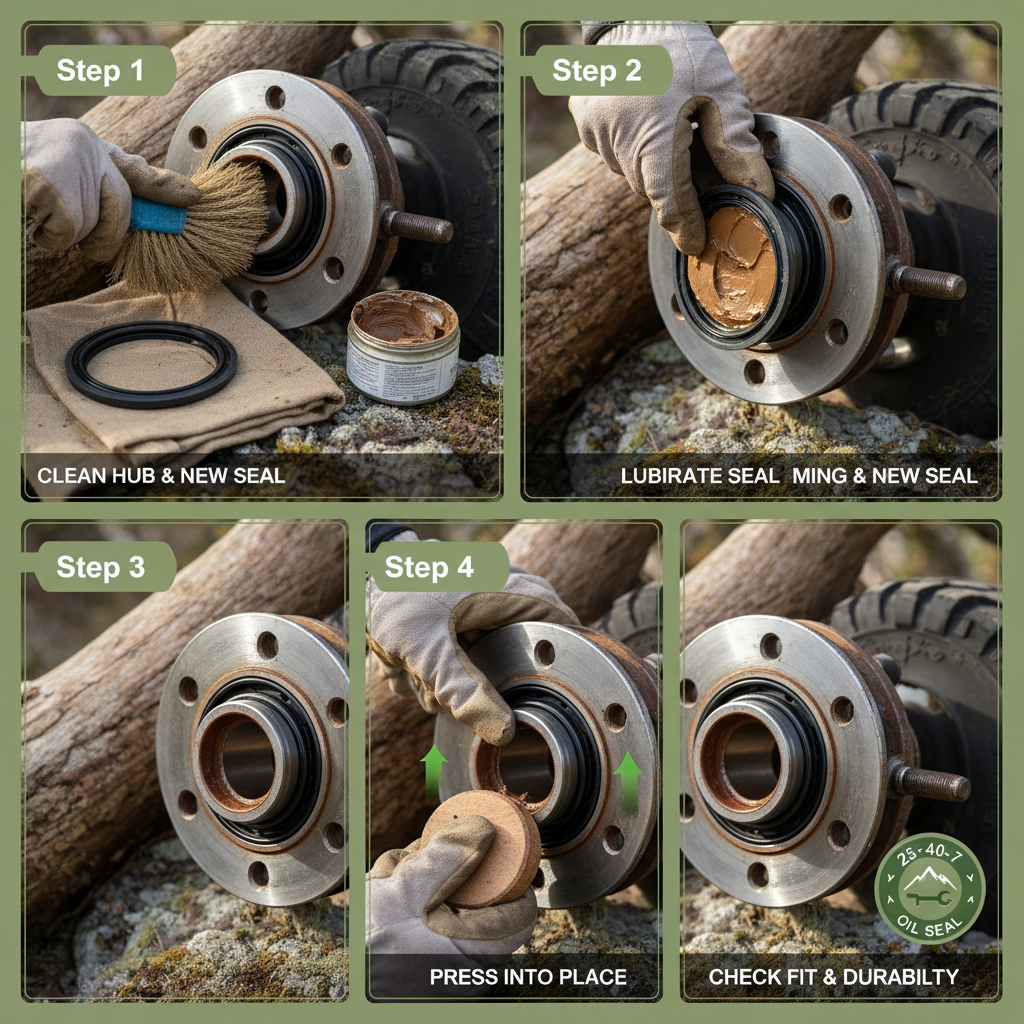
In the precision-driven world of industrial machinery, the integrity of a sealing system can mean the difference between seamless operation and catastrophic failure. The 25 40 7 oil seal stands as a critical component in this ecosystem, providing a precise barrier that prevents lubricant leakage while blocking external contaminants from entering sensitive mechanical housings. Understanding the specific dimensions and material properties of this seal is essential for engineers aiming to optimize equipment longevity and reduce unplanned downtime across various manufacturing sectors.
Globally, the demand for high-performance sealing solutions has surged as industries move toward higher rotational speeds and more extreme operating temperatures. The 25 40 7 oil seal is engineered to meet these rigorous standards, ensuring that hydraulic and mechanical systems maintain their pressure and purity. By integrating advanced elastomer compounds and reinforced casing, this specific seal size addresses the common industry challenge of "seal blowout" and premature wear in medium-duty applications.
Whether applied in agricultural machinery, automotive transmissions, or specialized industrial pumps, the role of the 25 40 7 oil seal is to provide a reliable, cost-effective solution for fluid retention. For maintenance professionals and procurement officers, selecting a seal that adheres to strict ISO tolerances ensures compatibility and safety. This guide explores the technical depth, global applications, and future innovations surrounding this indispensable rubber component.
Global Industrial Relevance of 25 40 7 Oil Seal
The global industrial landscape relies heavily on the standardization of components to ensure interoperability and rapid maintenance. The 25 40 7 oil seal serves as a benchmark for medium-bore shafts, providing a universal fit that allows manufacturers across Europe, Asia, and North America to maintain consistent quality controls. In an era where ISO 9001 standards dictate production, the precision of these dimensions—25mm inner diameter, 40mm outer diameter, and 7mm thickness—is non-negotiable.
Beyond simple dimensions, the global relevance of this seal is tied to the reduction of environmental waste. By preventing oil leaks in heavy machinery, the 25 40 7 oil seal helps companies adhere to strict environmental regulations regarding soil and water contamination. As emerging economies scale their manufacturing capabilities, the adoption of high-quality rubber sealing solutions becomes a cornerstone for sustainable industrial growth.
Technical Definition and Material Composition
At its core, the 25 40 7 oil seal is a radial shaft seal designed to retain lubricants and exclude dust, moisture, and other contaminants. It consists of a flexible elastomer lip that maintains contact with the rotating shaft, often supported by a metal casing that provides structural rigidity and ensures the seal remains firmly seated within the housing. The "25 40 7" nomenclature specifically refers to its metric dimensions, making it a standard choice for a wide array of rotational equipment.
The material composition is where the true engineering happens. Depending on the application, these seals are typically manufactured from Nitrile Rubber (NBR) for general purpose oil resistance, Viton (FKM) for high-temperature environments, or Silicone for extreme cold. The choice of material for a 25 40 7 oil seal directly impacts its chemical compatibility with various lubricants and its ability to withstand ozone or UV exposure in outdoor settings.
Modern manufacturing processes, such as injection molding and precision curing, ensure that the lip geometry is perfect. A slightly offset lip profile allows for the creation of a microscopic lubricant film, which reduces friction and heat buildup. This technical sophistication transforms the 25 40 7 oil seal from a simple rubber ring into a high-precision engineering component capable of operating under thousands of cycles without failure.
Core Components for Enhanced Durability
To achieve maximum longevity, the 25 40 7 oil seal integrates several key design elements. First is the sealing lip, which is the primary point of contact. By utilizing a spring-loaded design, the seal maintains constant radial pressure against the shaft, even as the rubber naturally relaxes over time due to heat and wear.
Second, the metal reinforcement shell of the 25 40 7 oil seal prevents the elastomer from distorting under high-pressure conditions. This rigidity is crucial when the seal is pressed into a housing, ensuring that the outer diameter remains exactly 40mm, which prevents "creep" and subsequent leakage.
Finally, the addition of a dust lip (in double-lip configurations) provides an extra layer of defense. For a 25 40 7 oil seal operating in dusty environments—such as concrete mixers or wheel hubs—the dust lip acts as a scraper, removing debris before it can reach the main sealing edge, thereby extending the life of the internal components.
Performance Metrics and Efficiency Analysis
Evaluating the efficiency of a 25 40 7 oil seal involves analyzing friction coefficients, leak rates, and thermal stability. High-efficiency seals reduce the parasitic power loss of the machine by minimizing the torque required to rotate the shaft. When the material is optimized, the seal provides a "tight" fit without creating excessive heat that could degrade the lubricant.
Furthermore, the scalability of these seals across different product lines—from Hydraulic Seal Kits to Wheel Hub Oil Seals—demonstrates their versatility. A well-implemented 25 40 7 oil seal can reduce maintenance intervals by up to 30% compared to low-grade alternatives, directly impacting the bottom line of industrial operations.
Comparison of 25 40 7 Oil Seal Material Performance
Global Application Scenarios and Case Studies
In real-world industrial zones, the 25 40 7 oil seal is frequently deployed in agricultural equipment across Southeast Asia and South America. For instance, in harvest machinery operating in muddy, humid conditions, the use of a reinforced 25 40 7 oil seal prevents the ingress of grit, which would otherwise score the shaft and lead to complete transmission failure.
Another critical use case is found in the construction industry, specifically within Concrete Mixer Seals. In these high-vibration environments, the 25 40 7 oil seal ensures that the gear lubrication remains intact despite constant jarring and exposure to alkaline cement dust. This application highlights the importance of choosing a seal with high abrasion resistance and a secure housing fit.
Long-Term Economic and Operational Value
The investment in a premium 25 40 7 oil seal pays off through the reduction of "Total Cost of Ownership" (TCO). While lower-cost seals may seem attractive initially, their higher failure rate leads to increased labor costs for replacement and the high cost of lost production. By opting for high-grade rubber components, companies ensure operational continuity and equipment reliability.
From a safety perspective, the reliability of the 25 40 7 oil seal is paramount. In hydraulic systems, a sudden seal failure can lead to pressure drops that cause mechanical instability, potentially endangering operators. Therefore, the value of these seals is not just in lubricant retention, but in the peace of mind and safety they provide to the workforce.
Furthermore, the sustainability angle cannot be ignored. Longer-lasting seals mean fewer replacements and less rubber waste entering landfills. When a 25 40 7 oil seal is engineered for a ten-year lifespan rather than a two-year lifespan, the environmental footprint of the machinery is significantly reduced, aligning corporate goals with global green initiatives.
Future Innovations in Sealing Technology
The future of the 25 40 7 oil seal lies in the integration of "smart materials." Researchers are currently developing elastomer compounds infused with nano-sensors that can detect wear or temperature spikes in real-time. This would allow the 25 40 7 oil seal to signal a maintenance requirement before a leak even occurs, moving industry from reactive to predictive maintenance.
Additionally, the shift toward biodegradable lubricants is forcing a redesign of seal materials. Future iterations of the 25 40 7 oil seal will need to be chemically compatible with bio-oils without swelling or losing elasticity. This transition is crucial as the automotive and industrial sectors pivot toward carbon neutrality and eco-friendly fluids.
Automation in manufacturing, such as 3D printing of custom-profile seals, may also allow for the 25 40 7 oil seal to be customized for specific shaft roughness levels. By tailoring the seal lip to the exact micron-level finish of the shaft, friction can be further reduced, leading to unprecedented levels of energy efficiency in rotational machinery.
Comparison Analysis of 25 40 7 Oil Seal Material Variants
|
Material Type
|
Temp Resistance
|
Wear Resistance
|
Typical Application
|
| NBR (Nitrile) |
-40°C to 120°C |
Moderate |
General Gearboxes |
| FKM (Viton) |
-20°C to 200°C |
High |
High-Temp Engines |
| Silicone |
-60°C to 230°C |
Low |
Food Processing |
| Polyurethane |
-30°C to 110°C |
Extreme |
Hydraulic Cylinders |
| EPDM |
-50°C to 150°C |
Moderate |
Weather-exposed Hubs |
| PTFE Mix |
-100°C to 260°C |
High |
Chemical Pumps |
FAQS
The numbers represent the dimensions of the seal in millimeters. Specifically, '25' is the inner diameter (shaft size), '40' is the outer diameter (housing bore size), and '7' is the width or thickness of the seal. These precise measurements ensure a tight interference fit, which is critical for preventing leaks in high-pressure environments.
Material choice depends on the operating environment. NBR is ideal for standard oils and moderate temperatures. If your equipment handles high heat or aggressive chemicals, FKM (Viton) is recommended. For extreme cold or food-grade applications, Silicone is the best choice. Always check the lubricant compatibility chart before installation.
No, it is highly recommended to never reuse an oil seal. During installation, the rubber lip conforms to the shaft, and the metal casing may experience slight deformation. Removing the seal often damages the lip edge or the tension spring, which would compromise the sealing integrity and lead to immediate leakage upon re-installation.
Common causes include shaft misalignment, which creates uneven wear on the lip; contamination from abrasive dust that scores the rubber; and overheating, which causes the elastomer to harden and crack. Using the wrong material for the lubricant also leads to chemical swelling or degradation, resulting in premature failure.
While a standard 25 40 7 oil seal is excellent for retaining lubricants, for extreme high-pressure hydraulic applications, you should ensure the seal has a reinforced metal case and possibly a secondary sealing lip. Check if a "High Pressure Oil Seal" variant is required to prevent the seal from being pushed out of the housing under load.
Replacement intervals vary by application. In clean, indoor industrial environments, seals can last several years. However, in "dirty" applications like concrete mixing or agricultural work, they should be inspected every 6-12 months. The best practice is to replace them during scheduled overhaul cycles to avoid unplanned downtime.
Conclusion
The 25 40 7 oil seal may seem like a small component, but its impact on industrial efficiency, equipment longevity, and operational safety is immense. By combining precise metric dimensions with advanced material science, this seal ensures that the lifeblood of machinery—its lubricant—stays where it belongs, while keeping the harsh external environment at bay. From the selection of the right elastomer to the precision of the metal casing, every detail contributes to the overall reliability of the system.
Looking ahead, the evolution of sealing technology will continue to push the boundaries of durability and intelligence. As industries strive for greater sustainability and predictive maintenance, the 25 40 7 oil seal will adapt through new materials and smart integrations. For businesses looking to optimize their machinery and reduce waste, investing in high-quality sealing solutions is a strategic imperative. Visit our website for more professional sealing solutions: www.hkaiseal.com