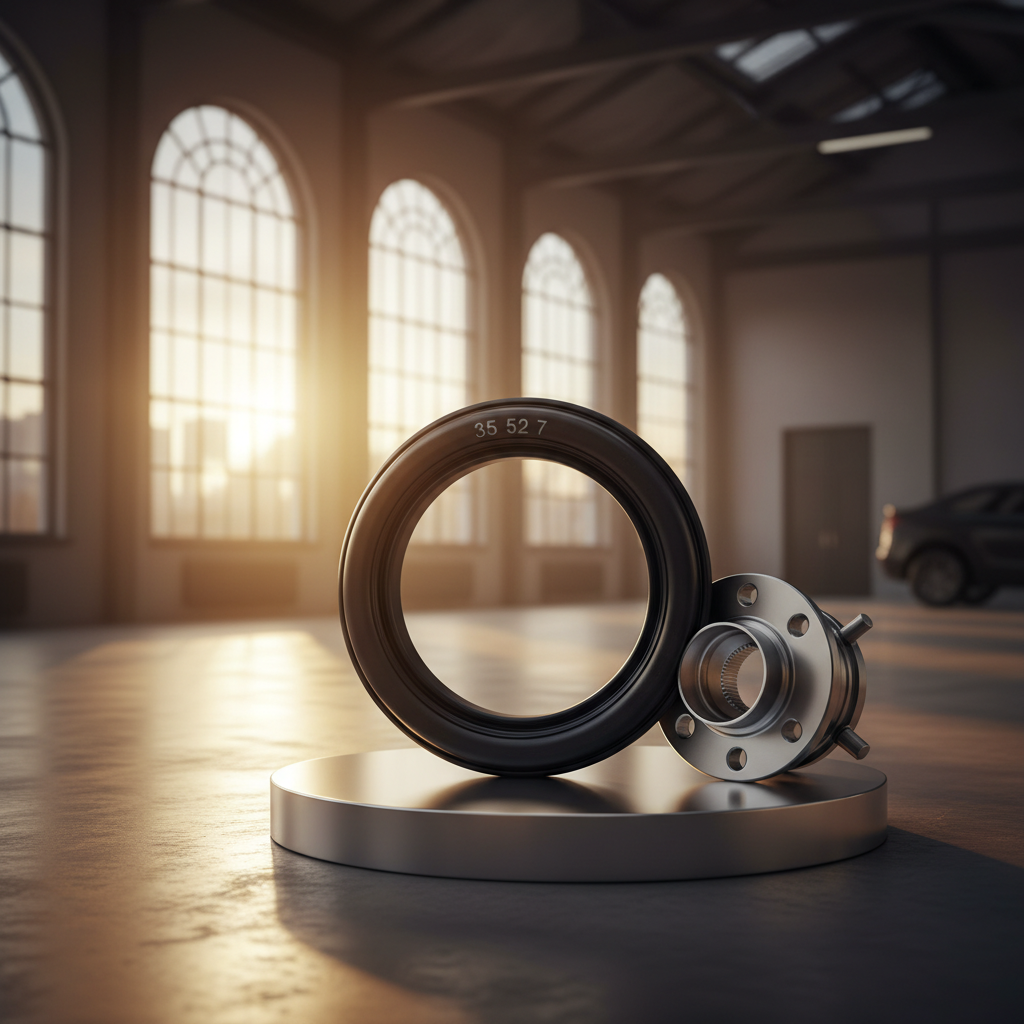
In the complex world of mechanical engineering, the integrity of a system often depends on the smallest components. industrial oil seals serve as the critical first line of defense, preventing lubricant leakage and protecting internal machinery from contaminating external pollutants. Without high-performance sealing solutions, the friction-induced wear and tear on rotating shafts would lead to catastrophic equipment failure and costly unplanned downtime.
The global demand for precision-engineered sealing components has surged as industries push toward higher operating pressures and more extreme temperatures. From heavy-duty construction machinery to high-precision automotive assemblies, the role of these components is to ensure operational continuity. By maintaining a vacuum-tight or pressure-resistant barrier, these seals optimize energy efficiency and extend the lifespan of expensive industrial assets.
Understanding the nuances of material selection—such as the difference between NBR and FKM—and the necessity of pressure resistance is vital for any maintenance engineer. This guide explores the technical specifications, application scenarios, and innovative trends surrounding industrial oil seals, specifically focusing on high-pressure TCV designs that withstand up to 0.98MPa to ensure your machinery operates at peak performance.
Global Relevance of Industrial Oil Seals
On a global scale, the manufacturing sector relies heavily on the standardization of components to maintain cross-border supply chains. industrial oil seals are integral to this ecosystem, adhering to rigorous ISO standards to ensure that a seal manufactured in Hebei can perform seamlessly in a machine operating in Europe or North America. The economic impact of sealing failure is immense; according to industry analysis, lubricant leakage is one of the top three causes of mechanical failure in rotating equipment.
The challenge lies in the diversity of operating environments. A seal must not only hold back oil but also repel dust and withstand fluctuating pressures. The introduction of the TCV high-pressure series addresses this by offering a reinforced structure (often incorporating a metal ring) that allows the seal to maintain its geometry under pressures as high as 0.98MPa, preventing the "blow-out" effect common in standard seals.
Defining High-Pressure Sealing Technology
In simple terms, industrial oil seals are engineered barriers designed to retain lubricants within a housing while excluding contaminants from the outside. While a standard seal might suffice for low-load applications, high-pressure oil seals, such as the TCV type, are specifically designed for environments where fluid pressure exerts significant force against the sealing lip.
Modern industry requires these components to be more than just "plugs." They must be dynamic, meaning they can maintain a tight seal while a shaft rotates at high speeds. This requires a precise balance between the hardness of the material and the flexibility of the lip. By integrating a metal ring, high-pressure seals gain the structural rigidity needed to resist deformation under extreme loads.
From a humanitarian and safety perspective, the reliability of these seals is non-negotiable. In critical infrastructure, such as hydraulic lifts or heavy-duty braking systems, a seal failure isn't just a maintenance issue—it's a safety risk. Consequently, the shift toward customized sizes and materials (like FKM for chemical resistance) reflects a broader industrial movement toward "zero-failure" engineering.
Core Components and Material Science
The effectiveness of industrial oil seals is primarily determined by their material composition. NBR (Nitrile Butadiene Rubber) is the industry standard for general-purpose oil resistance and durability, providing a cost-effective solution for most hydraulic and automotive applications.
For more demanding environments, FKM/FPM (Fluoroelastomer) is employed. This material offers superior resistance to high temperatures and aggressive chemicals, making it indispensable for industrial oil seals used in aerospace or chemical processing plants where standard rubber would degrade rapidly.
Beyond the elastomer, the physical structure plays a key role. The addition of a metal ring in high-pressure TCV seals provides the necessary reinforcement to prevent the seal from extruding into the clearance gap between the shaft and the housing when pressure reaches the 0.98MPa threshold.
Performance Metrics for TCV Oil Seals
Evaluating the performance of industrial oil seals requires a look at specific KPIs: pressure resistance, temperature stability, and wear rate. The TCV series is specifically benchmarked against its ability to maintain a seal at 0.98MPa, which is significantly higher than standard dust or oil seals.
To better understand how different material choices impact the performance of these seals under various industrial stresses, we can analyze the relative efficiency of NBR versus FKM and metal-reinforced options.
Performance Rating of TCV Sealing Methods
Real-World Applications and Use Cases
In the construction sector, industrial oil seals are the unsung heroes of concrete mixers and hydraulic excavators. The TCV high-pressure seal is frequently used in hydraulic cylinders where the fluid pressure must be maintained to lift heavy loads without leakage. In remote industrial zones, where maintenance crews are few, the longevity of a high-pressure seal can mean the difference between a project staying on schedule or halting for weeks.
Furthermore, in automotive wheel hubs and transmission systems, the "Wheel Hub Oil Seal" and "Dust Oil Seal" categories ensure that grease remains inside the bearing while road grit and water are kept out. By choosing the correct size from a catalog—ranging from small 13x26x7 seals to massive 185x205x10/8.5 components—engineers can ensure a perfect fit that minimizes friction and maximizes fuel efficiency.
Long-Term Value and Reliability
Investing in premium industrial oil seals provides a tangible return on investment (ROI) through reduced maintenance costs. While a low-cost seal may seem attractive initially, the cost of a single hour of production downtime often far exceeds the price difference between a standard seal and a high-performance TCV seal.
Beyond the financial aspect, there is the element of trust and safety. In high-pressure hydraulic systems, a seal that resists deformation under 0.98MPa provides peace of mind to operators. This reliability fosters an environment of innovation, as engineers can design more powerful machines knowing that the sealing technology can keep up with the increased pressures.
Sustainability is another key advantage. By preventing oil leaks, these seals protect the environment from hazardous chemical runoff. High-quality elastomers like FKM extend the replacement cycle, reducing the volume of rubber waste entering landfills and promoting a more circular economy in the manufacturing sector.
Future Trends in Sealing Innovation
The future of industrial oil seals is leaning toward "smart seals" and advanced polymers. We are seeing the integration of nano-materials into rubber compounds to increase abrasion resistance and reduce the coefficient of friction, which further lowers energy consumption in rotating machinery.
Digital transformation is also hitting the sealing industry. With the rise of Industry 4.0, there is a growing demand for seals that can be paired with sensors to monitor wear in real-time, allowing for predictive maintenance rather than reactive repairs. This shift ensures that a seal is replaced exactly when it reaches its wear limit, not before or after.
As the world moves toward green energy, the demand for seals that can handle biodegradable lubricants and hydrogen-based fuels is increasing. The adaptability of TCV designs—offering both standard and customized options—positions them well to meet these emerging requirements.
Technical Analysis of TCV High-Pressure Oil Seal Specifications
| Material Type |
Pressure Rating |
Primary Application |
Durability Score |
| NBR (Nitrile) |
Up to 0.98MPa |
General Hydraulics |
7/10 |
| FKM (Viton) |
Up to 0.98MPa |
High-Temp Chemical |
9/10 |
| Rubber + Metal Ring |
High Pressure TCV |
Heavy Machinery |
10/10 |
| Custom Polyurethane |
Variable |
Specialized Industry |
8/10 |
| Standard Rubber |
Low Pressure |
Light Equipment |
6/10 |
| Reinforced FPM |
Extreme Pressure |
Aerospace/Oil & Gas |
9/10 |
FAQS
The High Pressure TCV oil seals are specifically engineered to withstand pressures up to 0.98MPa. This is achieved through the combination of high-grade elastomers (NBR or FKM) and a reinforcing metal ring that prevents the seal from extruding under load.
Choose NBR for standard oil and grease applications where cost-efficiency is key and temperatures are moderate. Opt for FKM/FPM if your application involves high temperatures, aggressive chemicals, or highly corrosive fluids, as it offers far superior chemical resistance.
Yes, while we provide an extensive catalog of sizes (from 13x26x7 to 185x205x10), we offer full customization services. You can specify the inner diameter, outer diameter, and thickness to fit your specific machinery requirements.
The metal ring acts as a skeletal support. In high-pressure environments, rubber alone can deform or "squeeze" into the gap between the shaft and housing. The metal ring maintains the seal's structural integrity and ensures the lip remains tight against the shaft.
Ensure the shaft surface is smooth and free of burrs. Using the correct lubricant and maintaining the system's cleanliness are crucial. Additionally, choosing a seal with the correct material (e.g., FKM for high heat) prevents the rubber from hardening and cracking.
Our minimum order quantity (MOQ) for TCV high-pressure oil seals is generally 20 pieces. This allows us to ensure quality control during the production process while remaining accessible for small-to-medium industrial repairs.
Conclusion
In summary, industrial oil seals are far more than simple rubber rings; they are precision-engineered components that safeguard the efficiency and safety of global industrial operations. From the material versatility of NBR and FKM to the structural reinforcement of the TCV high-pressure series, the right seal minimizes downtime, reduces environmental impact, and maximizes the lifespan of critical machinery.
As we look toward the future of manufacturing, the integration of smarter materials and predictive monitoring will continue to redefine the sealing industry. For engineers and procurement managers, the priority should remain the balance of material compatibility and pressure resistance. To ensure your equipment is protected by the highest standards of sealing technology, visit our website: www.hkaiseal.com.