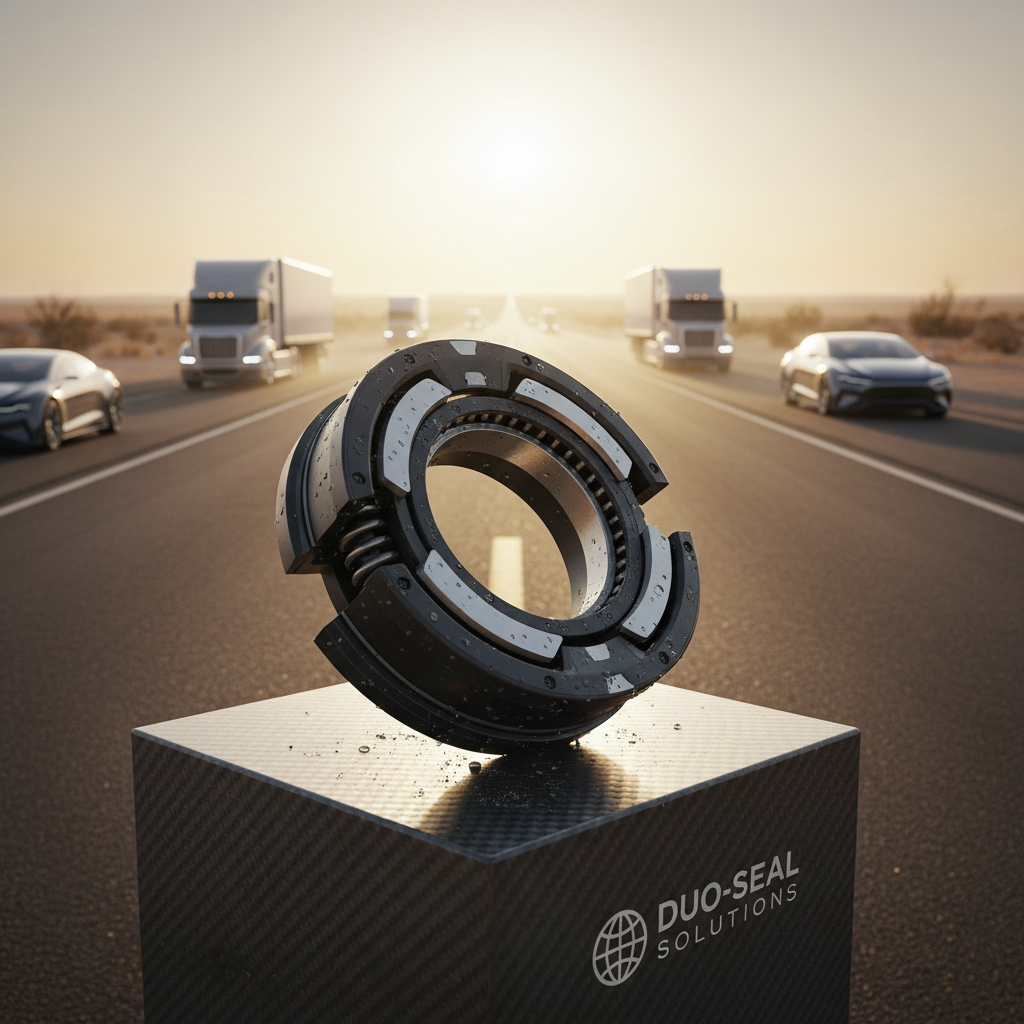
Maintaining the integrity of rotating assemblies in heavy machinery often comes down to a single, critical component: the hub grease seal. These specialized seals are engineered to retain essential lubrication while simultaneously blocking the ingress of abrasive contaminants, ensuring that bearings operate without premature failure.
In demanding environments—ranging from mining operations to construction sites—the failure of a hub seal can lead to rapid grease depletion and catastrophic axle damage. Understanding the synergy between material selection, housing fit, and environmental resistance is paramount for maintenance engineers and procurement specialists.
This technical exploration examines the operational logic of wheel hub sealing systems, focusing on how high-performance rubber compounds and precise engineering prevent downtime in heavy-duty automotive and industrial applications.

The Fundamental Role of Hub Grease Seals in Axle Systems

At its core, a hub grease seal acts as the primary barrier between the internal lubrication of a wheel hub and the external environment. Its primary mission is twofold: to keep high-viscosity grease inside the bearing housing and to keep water, mud, and dust particles outside. Without an effective seal, the grease would be purged by centrifugal force or contaminated by road debris, leading to friction-induced overheating.
The design typically involves a rubber sealing lip that maintains constant contact with the rotating shaft. In many industrial applications, these are reinforced with a metal case to provide structural rigidity and ensure a precise press-fit within the housing, preventing the seal from shifting under high rotational speeds.
For companies like Hebei Hankai Machinery Equipment Co., Ltd., producing these components requires a deep understanding of rubber elasticity and friction coefficients. The balance between a seal that is tight enough to prevent leaks but loose enough to avoid excessive heat generation is the hallmark of high-quality manufacturing.
Technical Engineering Factors That Define Seal Longevity
The lifespan of a hub seal is rarely determined by a single factor but rather by the interaction of material chemistry and mechanical tolerances. The choice of elastomer—such as NBR or Viton—determines the seal's resistance to temperature fluctuations and chemical degradation from lubricants or road salts.
Surface finish is another critical variable. If the shaft is too rough, it will abrade the sealing lip over time; if it is too smooth, the seal may fail to maintain a sufficient lubricant film, leading to "dry running" and thermal hardening of the rubber.
Furthermore, the internal geometry of the seal, including the spring tension (if applicable), ensures that the lip maintains contact even as the rubber undergoes thermal expansion and contraction during heavy braking or long-haul transport.
Critical Application Scenarios for Heavy-Duty Sealing Solutions
Different industries place vastly different demands on their sealing systems. In the construction sector, for example, concrete mixer trucks operate in highly alkaline environments where dust is omnipresent. Here, dust oil seals must provide an extra layer of protection to ensure that cement powder does not enter the bearing assembly.
Mining equipment faces the most extreme conditions, where seals are subjected to high-pressure water ingress and abrasive mineral particles. In these scenarios, high-pressure oil seals are utilized to withstand the surge of pressure that occurs when machinery moves through deep mud or water.
Agricultural machinery, conversely, requires seals that can handle seasonal temperature swings—from freezing winters to scorching summer harvests—without becoming brittle or overly soft, maintaining a consistent seal regardless of the weather.
Analyzing Seal Performance Across Different Operating Environments
When evaluating seal performance, engineers typically look at the rate of lubricant loss and the volume of contaminant ingress over a set number of operational hours. Standard seals often struggle in high-temperature environments where rubber degradation accelerates.
By implementing advanced rubber compounds and precise metal ring reinforcement, the efficiency of the sealing interface can be significantly improved, extending the intervals between scheduled maintenance.
hub grease seal Performance Metrics
As illustrated, the integration of optimized hub grease seals results in higher lubrication retention and a lower rate of contaminant penetration compared to generic industry benchmarks, directly impacting the Mean Time Between Failures (MTBF) for the entire axle assembly.
Strategic Procurement and Installation Best Practices
Procuring the correct seal requires more than just matching a part number; it necessitates a review of the operating environment. A seal designed for a warehouse forklift will fail rapidly if installed on a heavy-duty earthmover. Procurement teams should prioritize seals that offer a combination of chemical compatibility and dimensional precision.
Installation is where many seals are compromised. Using a hammer or a non-uniform press can distort the metal ring or nick the rubber lip. The use of a dedicated seal driver is essential to ensure the seal is seated square and flush against the housing shoulder.
Post-installation verification, including checking for proper grease filling and ensuring the hub nut is torqued to specification, is critical to prevent the seal from being "pinched" or shifted during the initial break-in period.
Emerging Material Trends in Rubber Sealing Technology
The industry is moving toward advanced hybrid elastomers that combine the oil resistance of Nitrile with the temperature stability of Fluorocarbon. These new materials may allow for longer service intervals and better performance in extreme climates.
There is also a growing emphasis on reducing friction through specialized surface coatings on the seal lip. By lowering the coefficient of friction, these seals could reduce the operating temperature of the hub, thereby slowing the thermal degradation of the grease itself.
Furthermore, the shift toward customized sealing solutions—where the seal is tailored to the specific shaft metallurgy of the machine—is becoming more common in high-value assets to maximize the return on investment and minimize unplanned downtime.
Comparison of Sealing Configurations for Industrial Selection
Selecting the appropriate seal depends on the primary threat to the bearing: is it high pressure, abrasive dust, or extreme heat? By categorizing seals by their design focus, maintenance managers can make more informed decisions during the replacement cycle.
The following table provides a comparative overview of different sealing approaches based on their technical strengths and typical deployment scenarios.
| Seal Type | Primary Strength | Ideal Application | Maintenance Focus |
|---|---|---|---|
| Standard Oil Seal | Cost-Efficiency | Light-duty trailers | Lip wear monitoring |
| Dust-Proof Seal | Contamination Block | Concrete mixers | Debris removal |
| High-Pressure Seal | Fluid Retention | Hydraulic cylinders | Pressure surge check |
| Viton/FKM Seal | Thermal Stability | Heavy-duty brakes | Chemical resistance |
| Metal-Cased Seal | Structural Rigidity | Mining axles | Housing fit precision |
| Customized Seal | Application Specific | Specialized Machinery | Dimensional accuracy |
Ultimately, the choice of a hub grease seal should align with the total cost of ownership. While a premium seal may have a higher initial cost, the reduction in bearing replacement costs and machine downtime often provides a significantly higher long-term ROI.
Frequently Asked Questions
Conclusion
The hub grease seal may be a small component, but it is the linchpin of axle reliability. By combining high-grade rubber compounds with precise mechanical engineering, these seals protect the most expensive rotating parts of a vehicle from the harshest elements of the industrial landscape.
For operators looking to enhance their equipment's uptime, prioritizing material compatibility and installation precision is key. Those evaluating sealing solutions for their fleet can review a wider range of professional product specifications and company capabilities through www.hkaiseal.com.