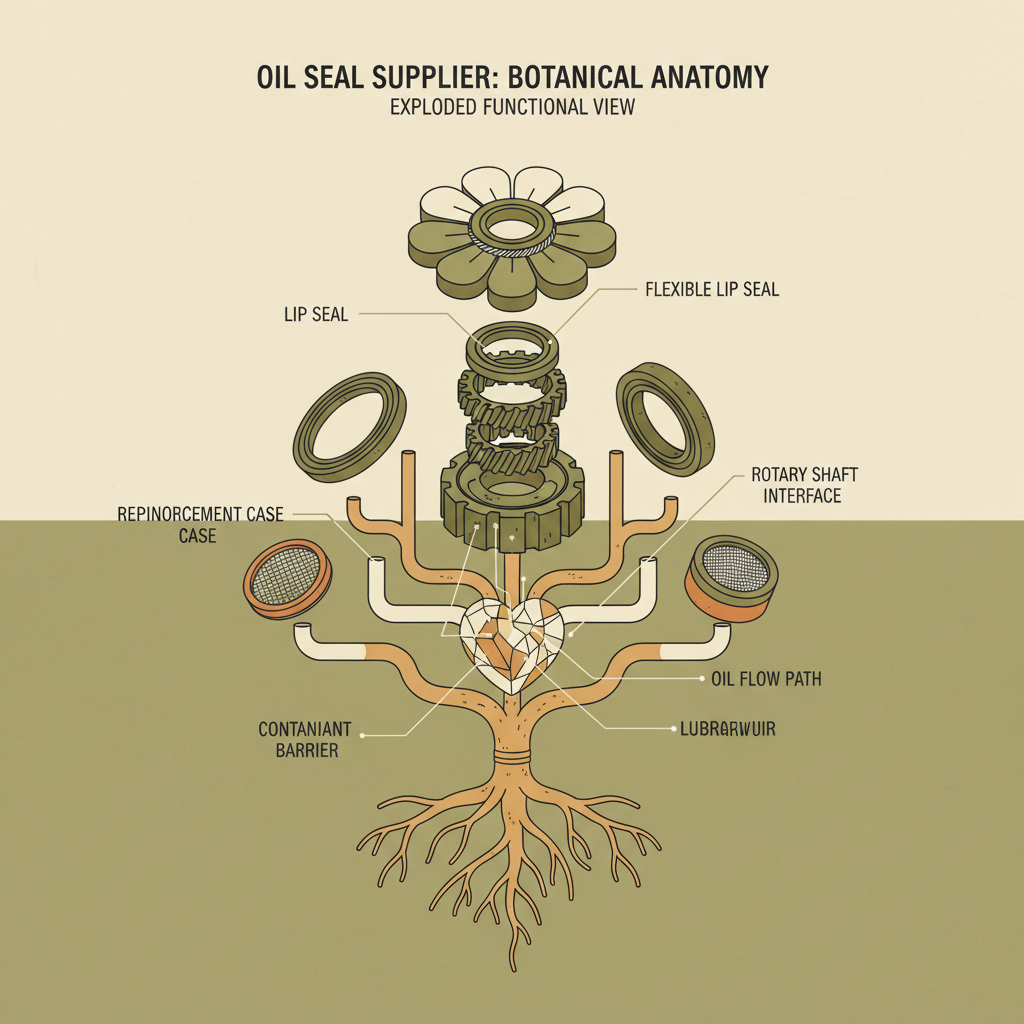
When mechanical systems operate under extreme pressure, the failure of a single sealing component can lead to catastrophic lubricant loss and unplanned downtime. Achieving a reliable seal in these environments requires a precise balance of material elasticity and structural reinforcement, moving beyond standard rubber rings to engineered high-pressure solutions.
The challenge for procurement managers and engineers lies in identifying high pressure oil seals suppliers who can provide not just a part, but a verified technical specification that matches the operating pressure and thermal profile of the machinery. In sectors like mining and heavy construction, the difference between a standard seal and a high-pressure rated seal often determines the lifespan of the entire assembly.
This analysis explores the technical requirements of high-pressure sealing, the critical role of material selection, and how to evaluate supplier capabilities to ensure operational stability in demanding industrial applications.

The Mechanics of Pressure Resistance

Standard oil seals rely on a simple lip tension to keep fluids in and contaminants out. However, as internal pressure rises, this lip can be pushed back or deformed, leading to immediate leakage. High-pressure oil seals, such as the TCN series, introduce a metal ring reinforcement that provides the structural rigidity necessary to maintain the seal's profile against high internal forces.
For instance, a seal rated for 0.98MPa must manage not only the fluid pressure but also the frictional heat generated by the rotating shaft. The interaction between the reinforced metal casing and the rubber lip ensures that the sealing force remains constant, preventing the "blow-out" effect common in non-reinforced seals.
Material Synergy in High-Pressure Seals
The choice of elastomer is the primary determinant of a seal's chemical and thermal compatibility. Nitrile Butadiene Rubber (NBR) is the industry standard for general oil and fuel resistance, offering a balanced cost-to-performance ratio for moderate temperature ranges. However, in high-pressure environments where heat is a byproduct of friction, NBR may reach its limit.
Fluorocarbon elastomers (FKM/FPM) provide a significant upgrade in thermal stability and chemical resistance. When high-pressure seals are deployed in oilfield equipment or high-performance automotive engines, FKM is often required to prevent the rubber from hardening or degrading under extreme conditions. The synergy between the FKM lip and the supporting metal ring allows for a seal that maintains its elasticity while resisting deformation.
Beyond the lip material, the quality of the metal reinforcement determines the seal's overall dimensional stability. High-grade carbon steel or stainless steel rings prevent the seal from expanding radially under pressure, which would otherwise reduce the contact pressure on the shaft and result in a failure.
Evaluating Seal Integrity and Failure Modes
Understanding why seals fail is critical for selecting the right supplier. Most high-pressure failures are not caused by the material itself, but by a mismatch between the seal's pressure rating and the actual operational peaks. When a seal is consistently pushed beyond its design limit—such as the 0.98MPa threshold—the lip undergoes permanent plastic deformation.
The reliability of a high-pressure seal depends on the "Contact Pressure vs. Fluid Pressure" ratio; if the fluid pressure exceeds the lip's radial contact force, the seal will inevitably fail regardless of the material quality.
Other common failure modes include abrasive wear from dust infiltration and thermal degradation. This is why many systems utilize a dual-seal configuration, combining a dust oil seal to block external particles and a high-pressure oil seal to contain internal fluids. This tiered approach significantly extends the service life of the internal components.
Performance Indices by Material Type
When comparing different elastomer options for high-pressure applications, engineers often look at a weighted index of heat resistance, chemical compatibility, and elasticity. While NBR is highly efficient for standard hydraulic kits, FKM is the superior choice for aggressive chemical environments.
The following chart illustrates a relative performance index for common sealing materials used by professional high pressure oil seals suppliers, based on standard industrial operational parameters.
Figure 2. Relative Performance Index of Sealing Materials
Critical Application Scenarios
In a typical industrial setting, such as a concrete mixer plant, the seals are subjected to both high internal hydraulic pressure and extreme external abrasive dust. This requires a combination of concrete mixer seals and reinforced high-pressure seals. If a supplier only provides a standard rubber lip without the necessary metal reinforcement, the seal will fail rapidly under the fluctuating pressures of the mixing cycle.
Similarly, in mining equipment and oilfield machinery, wheel hub oil seals must withstand shock loads and pressure spikes. In these scenarios, the ability of a manufacturer like Hebei Hankai Machinery Equipment Co., Ltd. to offer customized dimensions and specific material blends (like FKM for high-temperature oil) becomes a critical operational advantage, reducing the frequency of expensive field replacements.
Future Trends in Sealing Technology
The industry is moving toward "intelligent sealing," where materials are engineered with additive properties to reduce friction and heat generation. Reducing the coefficient of friction at the lip interface not only extends the life of the seal but also improves the overall energy efficiency of the hydraulic system.
Another significant shift is the move toward higher precision in manufacturing. The transition from standard ISO sizes to highly customized, non-standard dimensions allows for a tighter fit in specialized machinery, minimizing the risk of leakage during the initial break-in period.
Furthermore, there is an increasing demand for environmentally friendly elastomers that can match the performance of FKM without the associated environmental footprint. Suppliers who invest in advanced polymer research are likely to lead the next generation of high-pressure sealing solutions.
Supplier Selection Decision Framework
Choosing the right partner among various high pressure oil seals suppliers requires a structured evaluation. It is not enough to check the price; the technical capabilities of the factory—including their quality assurance systems (such as ISO9001) and their ability to provide customized OEM models—are far more indicative of long-term value.
Buyers should evaluate whether a supplier can provide a full range of products, from hydraulic seal kits to specific high-pressure TCN seals. A supplier that understands the relationship between the rubber material and the metal ring's rigidity can provide better technical guidance during the selection process.
The table below provides a framework for comparing different supplier tiers based on technical and operational requirements.
| Evaluation Factor | Standard Supplier | Technical Specialist | Premium Partner |
|---|---|---|---|
| Material Range | Basic NBR | NBR & FKM | Custom Polymer Blends |
| Pressure Rating | Low to Medium | Verified up to 1MPa | Ultra-High Pressure Ops |
| Customization | Standard Sizes Only | OEM Drawing Based | Full Engineering Support |
| Quality Control | Visual Inspection | ISO9001 Certified | Precise Instrument Testing |
| Lead Time | Short (Stocked) | Moderate (Production) | Optimized Supply Chain |
| Technical Support | Basic Catalog | Application Advice | Predictive Life Analysis |
Questions & Answers
A high pressure oil seal is distinguished by its structural reinforcement, typically a metal ring (like in the TCN series) that prevents the rubber lip from extruding or collapsing under high internal fluid pressure. While standard seals are designed for atmospheric or low-pressure containment, high-pressure variants are engineered to maintain a constant sealing force at pressures often exceeding 0.98MPa, ensuring that lubricant does not leak even during peak operational loads.
Choose FKM (Fluorocarbon) when the operating environment involves high temperatures or aggressive chemicals that would cause NBR (Nitrile) to harden and crack. FKM offers superior thermal stability and chemical resistance, making it essential for oilfield equipment, high-performance automotive engines, and chemical processing machinery. NBR is suitable for general hydraulic applications with moderate temperatures and standard petroleum-based lubricants.
Customization requires precise measurements of the shaft diameter (inner diameter), the housing bore (outer diameter), and the seal width. Professional suppliers often require a technical drawing or an OEM part number (such as the AP or BP series) to ensure a perfect fit. If a standard size is not available, a manufacturer can customize the dimensions to match your specific machinery, which is critical to avoid premature wear caused by improper fitment.
Lifespan varies based on the application, but reinforced seals generally last significantly longer than standard seals in high-load environments. Factors affecting longevity include the quality of the shaft surface finish, the presence of abrasive contaminants, and the consistency of the operating temperature. Implementing a dual-seal system (dust seal + pressure seal) can further extend the lifespan by protecting the primary sealing lip from external wear.
Yes, a high-pressure seal can typically function in a low-pressure system, but it may be over-engineered and more expensive. The primary concern is the "break-in" friction; because reinforced seals may have a stiffer profile, they can generate more heat on the shaft if the lubrication is insufficient. In most cases, however, the added durability is a beneficial trade-off for the slightly higher initial cost.
At a minimum, look for ISO9001 quality assurance certification, which indicates that the manufacturer follows a standardized process for production and quality control. Additionally, verify if the supplier has a proven track record of exporting to regulated markets (such as North America or Europe), as this often suggests their products meet international safety and performance standards for industrial machinery.
Final Thoughts
Maintaining operational efficiency in high-pressure mechanical systems depends entirely on the integrity of the sealing interface. By shifting the focus from simple part replacement to a technical evaluation of material synergy and structural reinforcement, companies can drastically reduce unplanned downtime and equipment wear.
Whether sourcing standard OEM sizes or customized solutions, the key is partnering with experienced high pressure oil seals suppliers who prioritize material science and precision engineering over bulk production. Investing in the correct seal specification today prevents the costly failures of tomorrow.