In the intricate world of industrial machinery, the precision of a single component can dictate the efficiency of an entire production line. The 25x38x7 oil seal stands as a critical barrier, engineered specifically to prevent lubricant leakage while keeping contaminants out of sensitive rotating assemblies. By maintaining a precise fit and utilizing advanced elastomeric materials, this specific seal size ensures that mechanical systems operate at peak performance without premature wear.
Globally, the demand for high-quality sealing solutions is driven by the relentless pursuit of operational uptime in sectors ranging from automotive manufacturing to heavy-duty construction. A failure in a component as small as a 25x38x7 oil seal can lead to catastrophic oil loss, resulting in unplanned downtime and expensive repairs. Consequently, understanding the material science and installation nuances of these seals is not just a technical requirement but a financial imperative for plant managers.
Integrating the right sealing technology allows industries to scale their operations while adhering to strict environmental and safety standards. Whether utilized in a high-pressure hydraulic system or a standard gearbox, the 25x38x7 oil seal provides a reliable intersection of durability and precision. This guide explores the technical dimensions, global applications, and future innovations that make this specific seal an indispensable asset in modern rubber and plastic manufacturing.
Global Industry Relevance of 25x38x7 Oil Seal
The global industrial landscape relies heavily on the standardization of components to ensure interchangeability and maintenance efficiency. The 25x38x7 oil seal adheres to international sizing standards, allowing it to be deployed across various continents in machinery that requires a 25mm inner diameter and a 38mm outer diameter. This standardization is crucial for ISO-certified facilities that prioritize lean manufacturing and rapid replacement cycles.
In the context of the rubber and plastics industry, the production of a high-performance 25x38x7 oil seal involves complex vulcanization processes to ensure the seal can withstand extreme temperature fluctuations. As industries push toward higher speeds and higher pressures, the reliance on these precise components has grown, making them a cornerstone of mechanical reliability in both developed and emerging industrial zones.
Defining the Technical Specifications of 25x38x7 Oil Seal
At its most basic level, the 25x38x7 oil seal is defined by its dimensions: an inner diameter (ID) of 25mm, an outer diameter (OD) of 38mm, and a width (thickness) of 7mm. These numbers are not arbitrary; they are engineered to fit specific shaft and housing tolerances, ensuring a tight radial seal that prevents the escape of lubricants and the ingress of external debris like dust or water.
Beyond the dimensions, the meaning of a high-quality seal lies in its material composition. Most 25x38x7 oil seal units are manufactured using NBR (Nitrile Butadiene Rubber), FKM (Viton), or VMQ (Silicone), depending on the chemical environment they will encounter. The choice of material determines the seal's resistance to oil, ozone, and extreme temperatures, directly impacting the lifespan of the machinery it protects.
In modern industry, these seals serve as a primary defense mechanism. By effectively managing the boundary between the lubricated interior of a machine and the harsh external environment, the 25x38x7 oil seal prevents friction-induced heat and wear, which is essential for maintaining the humanitarian need for safe, reliable transportation and infrastructure equipment globally.
Core Performance Factors for 25x38x7 Oil Seal
Durability is the foremost factor when evaluating a 25x38x7 oil seal. The ability of the rubber compound to resist abrasion under continuous rotational stress determines how often a system must be serviced. A durable seal maintains its lip tension over thousands of hours, ensuring that the sealing pressure remains constant despite the gradual wear of the shaft.
Chemical Compatibility is another critical aspect of the 25x38x7 oil seal performance. Not all seals react equally to different synthetic oils or hydraulic fluids. Using a seal with the wrong polymer can lead to swelling or hardening, which compromises the seal's integrity and leads to rapid failure in high-pressure environments.
Thermal Stability ensures that the 25x38x7 oil seal can operate in diverse climates, from freezing arctic conditions to the high heat of an engine bay. The elasticity of the material must be preserved across a wide temperature range to prevent the lip from becoming brittle or overly soft, both of which would lead to leakage.
Global Applications and Real-World Use Cases
The versatility of the 25x38x7 oil seal makes it a staple in various industrial sectors. In the automotive industry, these seals are often found in transmission systems and small engine components where precise oil retention is mandatory. In remote industrial zones, such as mining operations in Australia or oil rigs in the North Sea, the reliability of these seals reduces the need for frequent, costly technician visits.
Moreover, in specialized machinery like concrete mixers or hydraulic presses, the 25x38x7 oil seal acts as a crucial dust and oil barrier. For instance, in post-disaster relief operations where heavy machinery is used to clear debris, the seals must withstand extreme contamination. A failure in the sealing system of a hydraulic arm could halt critical rescue efforts, highlighting the social impact of component reliability.
Performance Comparison of 25x38x7 Oil Seal Variants
Long-Term Value and Operational Advantages
Investing in a high-grade 25x38x7 oil seal yields tangible economic benefits through reduced maintenance overhead. When a seal is engineered for longevity, the intervals between planned shutdowns are extended, which increases the overall equipment effectiveness (OEE). From a logical perspective, the cost of a premium seal is negligible compared to the cost of a full system failure and the subsequent loss of productivity.
Beyond the numbers, there is an emotional and safety dimension to using reliable sealing components. In heavy industrial environments, oil leaks can create slip hazards or lead to fire risks. By ensuring the 25x38x7 oil seal is perfectly seated and made of high-quality material, companies foster a culture of safety and trust among their workforce, knowing that the equipment they operate is stable and secure.
Future Trends in Sealing Technology
The future of the 25x38x7 oil seal is being shaped by the transition toward green energy and sustainability. Researchers are developing bio-based elastomers that offer the same mechanical properties as traditional NBR but with a significantly lower carbon footprint. This shift aligns with global initiatives to reduce the environmental impact of the rubber and plastics manufacturing sector.
Digital transformation is also entering the sealing world through "smart seals." While a standard 25x38x7 oil seal is a passive component, the integration of nano-sensors into the seal housing could allow for real-time monitoring of wear and leakage. This would move industries from reactive maintenance to predictive maintenance, where a seal is replaced exactly when it begins to degrade.
Furthermore, automation in the production of the 25x38x7 oil seal is increasing precision to the micron level. Using AI-driven quality control, manufacturers can eliminate microscopic voids in the rubber compound, ensuring that every single seal produced meets a zero-defect standard, which is critical for aerospace and medical-grade applications.
Overcoming Implementation Challenges
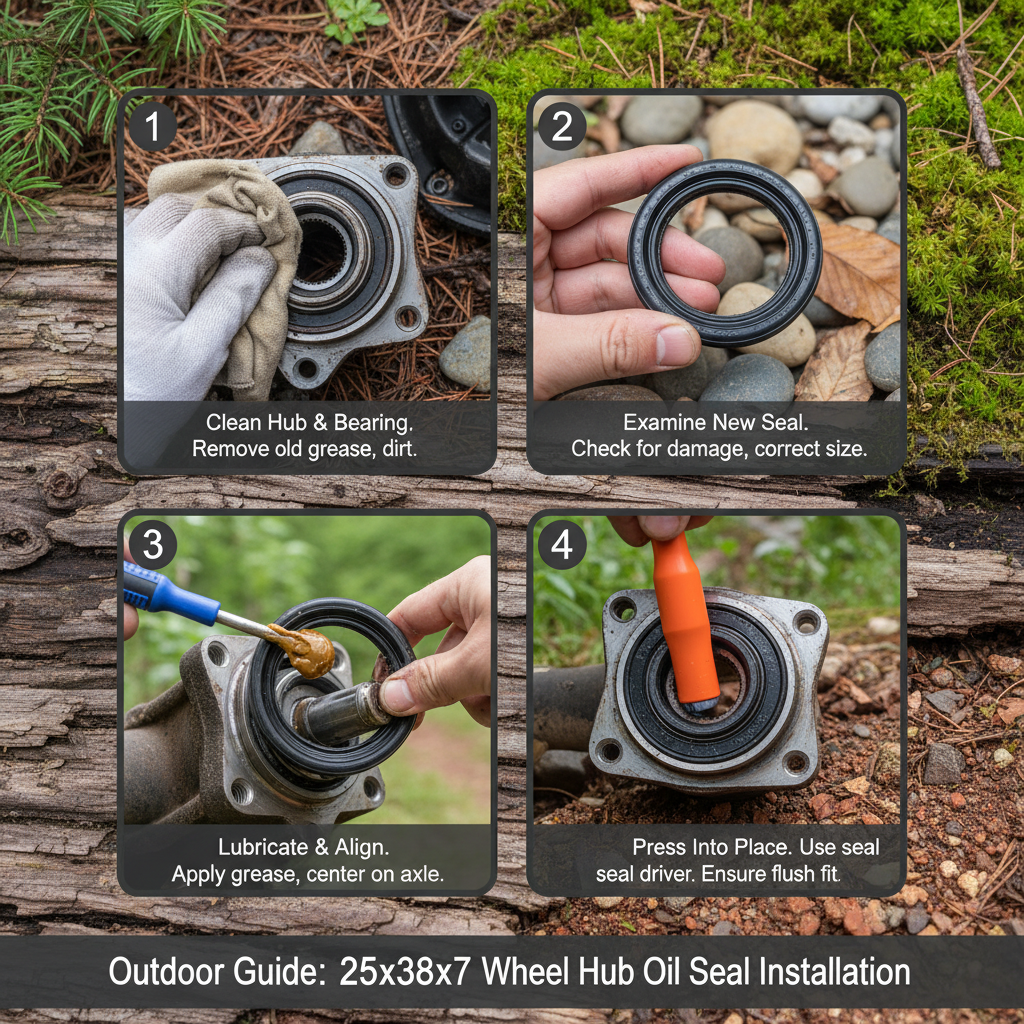
One of the most common challenges in applying a 25x38x7 oil seal is improper installation. Even the highest quality seal will fail if it is installed at an angle or if the shaft is scratched during the process. Expert insights suggest using specialized installation tools and a thin layer of lubricant during assembly to prevent "lip folding," which is a primary cause of early-stage leakage.
Another limitation is the mismatch between the seal material and the operating environment. Many operators choose a standard 25x38x7 oil seal based on price without considering the chemical aggressiveness of the lubricant. The solution lies in a rigorous material audit; switching from NBR to FKM in high-temperature environments can increase the seal's lifespan by 300%, proving that the "cheapest" option is often the most expensive in the long run.
Finally, maintaining the correct housing tolerance is often overlooked. If the bore for the 25x38x7 oil seal is worn or oversized, the seal may rotate within the housing, leading to rapid wear. Implementing a periodic measurement schedule using precision gauges allows engineers to detect housing wear before it causes seal failure, ensuring the integrity of the entire assembly.
Comparative Analysis of 25x38x7 Oil Seal Material Performance
| Material Type |
Temp Resistance |
Chemical Stability |
Wear Rating (1-10) |
| NBR (Standard) |
-40°C to 120°C |
Moderate |
7 |
| FKM (Viton) |
-20°C to 200°C |
High |
9 |
| VMQ (Silicone) |
-60°C to 230°C |
Moderate |
6 |
| EPDM |
-50°C to 150°C |
Low (Oil) / High (Steam) |
8 |
| Polyurethane |
-30°C to 110°C |
Moderate |
10 |
| PTFE Composite |
-100°C to 260°C |
Extreme |
9 |
FAQS
The numbers represent the critical dimensions of the seal in millimeters. "25" is the inner diameter (ID) that fits onto the shaft, "38" is the outer diameter (OD) that fits into the housing or bore, and "7" is the width or thickness of the seal. Ensuring these exact measurements is vital for a leak-proof installation.
Choose NBR for general-purpose applications with moderate temperatures and standard mineral oils, as it is cost-effective. Opt for FKM (Viton) if your machinery operates at high temperatures (above 120°C) or is exposed to aggressive chemicals and synthetic lubricants, as it offers superior thermal and chemical resistance.
Common causes include "lip folding" during installation, which occurs when the seal is pushed in crookedly. Other reasons include a scratched shaft surface that allows oil to bypass the lip, or an oversized housing bore that prevents the seal from maintaining a tight radial grip on the outer diameter.
A standard 25x38x7 oil seal is primarily designed for low to medium pressure. For high-pressure hydraulic systems, you should use a version reinforced with a metal case or a specialized high-pressure seal design to prevent the lip from being pushed back into the housing under load.
Replacement intervals depend on the environment and material. In clean, temperature-controlled environments, a high-quality seal may last several years. However, in dusty or high-heat industrial settings, it is recommended to inspect seals every 6-12 months and replace them during scheduled maintenance to avoid unplanned downtime.
No, compatibility depends on the elastomer. For example, EPDM seals are excellent for steam but will swell and fail if exposed to petroleum-based oils. Always verify that the material of your 25x38x7 oil seal is chemically compatible with the specific lubricant used in your machine to ensure longevity.
Conclusion
The 25x38x7 oil seal may seem like a minor component, but it plays a disproportionately large role in the reliability and efficiency of global industrial machinery. By balancing precise dimensions with advanced material science, these seals prevent costly leaks, protect critical internal components from contamination, and ensure that systems operate safely across diverse environments. From the selection of NBR for cost-efficiency to FKM for extreme heat, the right seal is the difference between a seamless production cycle and a catastrophic mechanical failure.
Looking forward, the integration of sustainable materials and predictive monitoring will further elevate the role of sealing technology. For engineers and procurement managers, the focus must remain on quality and correct specification rather than initial cost. By prioritizing high-performance sealing solutions, industries can achieve greater sustainability, improved safety, and an overall increase in operational longevity. Visit our website for more professional sealing solutions: www.hkaiseal.com